
The Influence of Parenthood on Kids' Fashion Trends: Celebrating Childhood


If you are a parent reading about kids fashion trends in 2026, I have something I want to say up front, because the trend roundups currently on the internet are not going to say it: most of what is being marketed to you as "trend" is not new, and most of what is genuinely new about kids' clothing in 2026 is not on the trend list at all. The new thing is who is choosing the clothes. Tween-aged kids — say, nine to twelve — are now actively curating their own outfits with a TikTok feed open beside them, and the parent's job has quietly shifted from selecting the wardrobe to gatekeeping it. That shift is what this piece is about. The twelve micro-trends, the brand callouts, the sustainability statistics — all of it is in service of helping you make that gate-keeping job a little easier.
The global children's wear market is on track for roughly USD 302.44 billion in 2026, with the narrower kids apparel category at USD 241.64 billion (Gitnux; Fortune Business Insights). In the US, the baby and children's clothing market is growing at a modest 1.27% CAGR through 2032, with H&M Kids, Janie and Jack, Gymboree, Hanna Andersson, and Old Navy as the leading mainstream players (PR Newswire / Markntel Advisors). Those are the goalposts. What is moving inside them is more interesting.
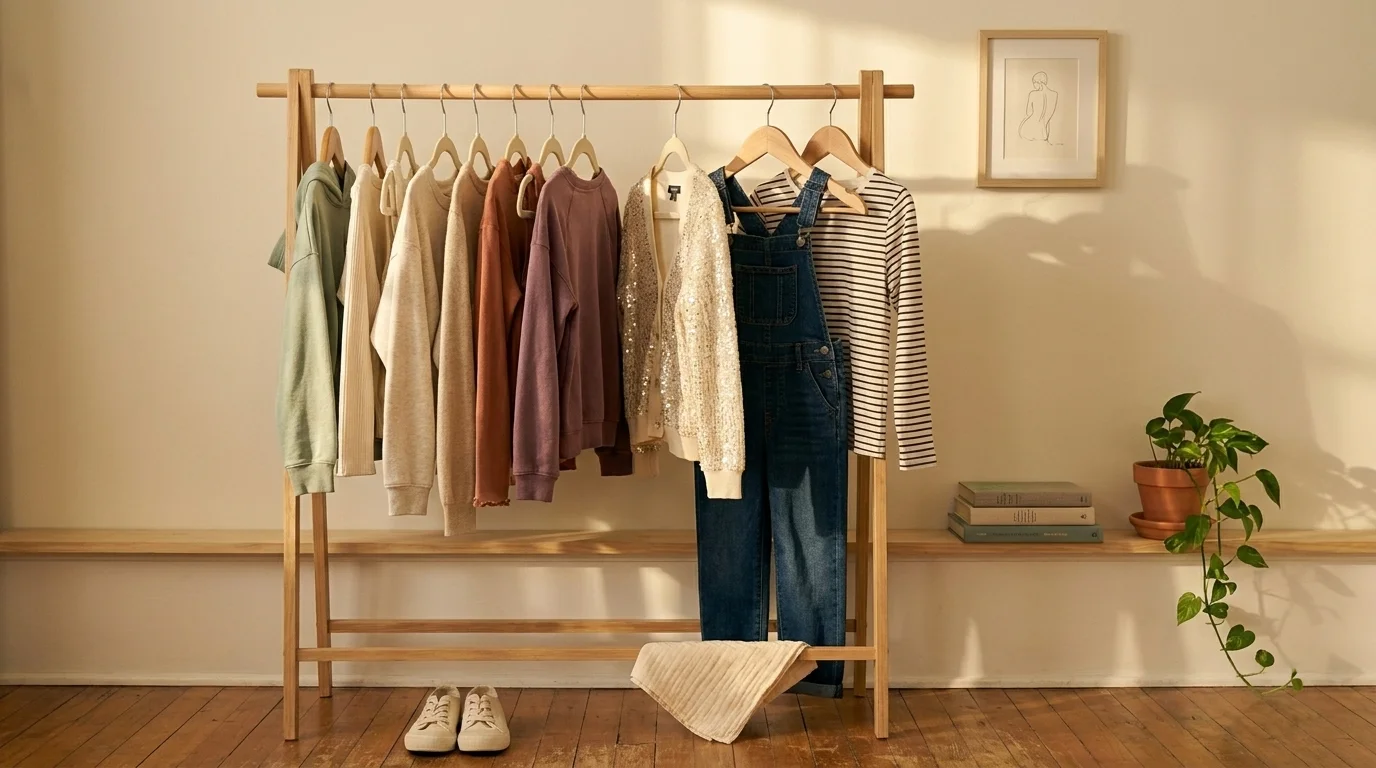
What Parents Are Actually Choosing in 2026
The single most useful statistic in this whole field, if you want to know what is actually changing under the hood of children's clothing, is the one about millennial parents and sustainable fabrics: 55% of millennial parents now choose sustainable fabrics for their kids' wear, up 20 percentage points from 2020 (Gitnux). That is a step-change, not a gradient. Inside the same survey work, 68% of parents now rank comfort as their top priority when buying children's clothing, and 52% of children's-wear purchase decisions are influenced by eco-friendly packaging — meaning the box matters now, not just what is in it (Gitnux). Second-hand kids clothing apps grew 59% in 2023, which is the year intent finally translated into purchase behaviour. The values shift is no longer aspirational. It is operational.
The thing the trend roundups do not say, because they sell new clothes, is that this is mostly a quiet revolt against fast fashion. The "investment over volume" framing now appears in mainstream retail editorial (Carriage Boutique). Parents are buying fewer, better pieces, more often labelled GOTS or OEKO-TEX, with the expectation that they will hand down to a younger sibling or last long enough to be resold. The 2026 fashion year is unusually honest about that.
The Twelve 2026 Micro-Trends, Read Honestly
The retail editorial layer has, between Masari Shop's 12-trend round-up and Carriage Boutique's parallel list, more or less codified what the 2026 kids fashion trend list looks like (Masari Shop; Carriage Boutique). I will quickly run through it and tell you which ones are worth investing in and which are essentially the same trend dressed in a new word.
- Oversized silhouettes. Real. Buying one size up was already what most experienced parents did. The market has now made it the design intent.
- Bold graphic prints (stars, hearts, lightning bolts, peace signs). Real for the 4-8 band; tweens have moved on from explicit graphics by about ten and prefer pattern over slogan.
- Everyday sparkle and shimmer. A genuine category shift — sparkle has moved from occasion-wear to weekday-wear, framed as "expressive, fun, empowering" rather than party-only (Lola and the Boys). My twelve-year-old owns three sequinned cardigans she wears to school. Two years ago, none of them existed.
- Gender-neutral cuts. This is the largest structural shift in the list, and the one most disguised by being marketed as a "trend".
- Sustainable and organic materials. Backed by the 55% statistic above and now the default position of every mid-tier brand.
- Athleisure. Mature and ubiquitous; not new. Worth investing in for school-age and tween bands because of how often it is worn.
- Nostalgic and retro prints. A parent-driven trend. Children do not buy retro; their parents do.
- Matching family or sibling sets. Driven by Instagram and TikTok family content creation, with influencers pushing what used to be a "twin day" novelty into a recurring purchase (Carriage Boutique; Accio). You will notice it more on social media than on the school run.
- Denim. Always with us.
- Playful accessories. Marginal; treat as add-ons, not category investments.
- Comfort-first breathable fabrics. Backed by the 68% comfort-priority statistic.
- Soft pastels and earth tones. Real. Last year was loud; this year is muted.
If you are doing the parent-budget calculus, the trends with both real shift and real durability are sustainable materials, gender-neutral cuts, oversized silhouettes, comfort-first fabrics, and sparkle-as-everyday. The rest are texture, not architecture.
Age-Band Decision Frames
The biggest single failure of the existing trend journalism is that it treats a four-year-old and an eleven-year-old as the same customer. They are not. The decision frame a parent applies changes shape twice in childhood and then again at the threshold of adolescence. Here is roughly what each band looks like, in 2026 reality.
Toddler (roughly 1-3). The parent fully curates. The child has opinions about colour and texture but no real veto. Comfort, durability, and easy-on/easy-off are the operating constraints. The sustainable-fabric and certification stuff matters most here because the clothing is on the skin all day. Hanna Andersson, Pact, Primary, and the Cat & Jack line at Target are the calmest entry points. Sparkle is parent-imposed.
Early-school (4-8). The parent curates, the child weighs in, and the parent learns which battles are worth picking. This is the band where the trend list above starts to matter, because the child has begun to notice it. They want the lightning-bolt sweatshirt and the sparkle leggings; you reasonably push back on items that do not fit the developmental stage. Janie and Jack and Old Navy cover this band on a budget; Hanna Andersson and Mini Boden cover it on a more invested budget. The graphic-print micro-trend lives here.
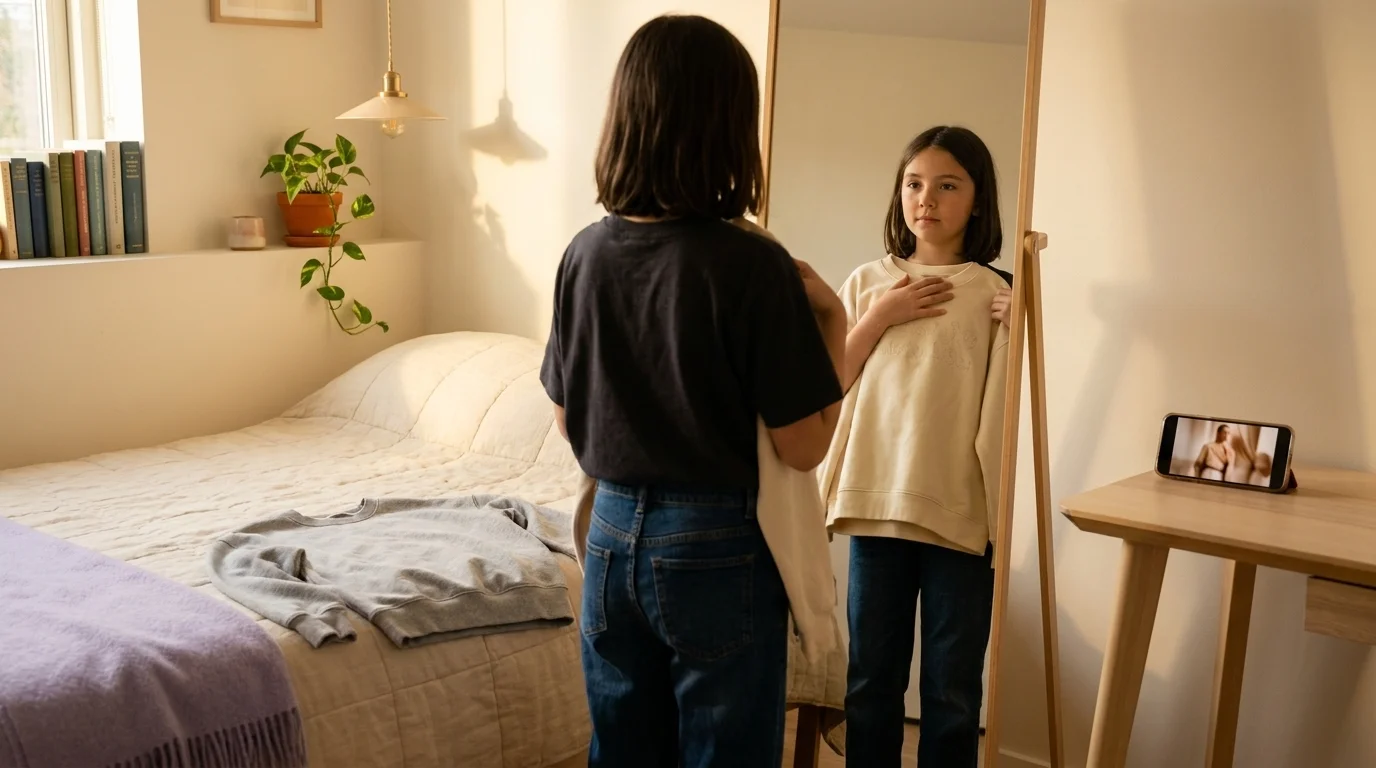
Tween (9-12). This is the band where the wheel turns. The child drives, the parent gatekeeps. The Hayden Girls editorial line, which is the only top-ranking SERP piece that segments tween specifically, puts it accurately: tweens now actively curate "Instagrammable/on-camera" outfits and parents act as gatekeepers balancing trend pressure with age-appropriateness (Hayden Girls). The good news is that most tween-driven requests in 2026 are not actually risky — sparkly cardigans, baggy jeans, a particular brand of trainer. The hard requests are the ones with appearance-coded undertones (cropped tops at ten, hyper-curated outfit "fits" for school, makeup at eleven), and they are the ones the next section is about.
When Your Tween Asks for a TikTok Trend
This is the part of kids fashion in 2026 that the trend roundups will not touch and that I, as someone who has been writing about teen tech for a living, can give you a working framework for.
If your tween brings you a request that originates on TikTok — and most of them now do — the request is doing two things at once. There is the object level (the cropped top, the matching set, the Stanley cup, the specific pair of trainers), and there is the social level (the want is for belonging, identity, and being legible to her friend group). Treat the social level as the real subject of the conversation. Object-level refusals tend to fail because they answer the wrong question.
The framework I use with my own kids, and that I recommend in the Substack readers I write for, has three steps. First, name the value behind the request out loud. ("You want to look like the girls at your lunch table. That is a normal twelve-year-old want; it does not embarrass either of us.") Second, check the specific object against your family's age-appropriate standards — including modesty if it is a value in your home, including school dress code, including durability, including fit for the developmental stage. Third, if the object fails the second check, offer a redirect that meets the social want. A cropped top might fail and a longer cropped sweatshirt over high-rise jeans might pass. A specific brand of cosmetic might fail and tinted lip balm might pass.
The framework will not work every time. It is also a vastly better posture than the one that goes "no, end of discussion" — which produces, depending on the kid, either a covert workaround or a quiet collapse of trust. The trend conversation is the values conversation. Take it seriously. Take the kid seriously too.
Inclusivity Beyond Marketing Copy
The inclusivity language on most kids-fashion pages does not survive contact with a parent of a child who actually needs it. Marketing copy uses "inclusive" to mean "we made the tee-shirt in a non-pink colour". Real inclusivity in kids' clothing in 2026 looks like four things, and they are mostly missing from the SERP-ranking trend pieces.
The first is adaptive clothing. Tommy Adaptive, the Tommy Hilfiger line for children with disabilities, and Target's Cat & Jack Adaptive line both ship 2026 collections with magnetic closures, side-zip openings, sensory-friendly seams, and wheelchair-friendly cuts. These are not specialty store purchases; they are at mass-market retailers. If you are dressing a child who uses a wheelchair, has a feeding tube, or has sensory-processing differences, you should know these lines exist.
The second is neurodivergent-friendly fabric construction. Tag-free seams, flatlock stitching, super-soft hand-feel, no scratchy elastic — the things that are merely "nice to have" for a neurotypical kid are deal-breakers for a sensory-sensitive one. Primary, Hanna Andersson, and the Cat & Jack base line score well here; Pact and Boody are strong on the organic-soft side.
The third is genuine size diversity. Kindred Bravely-tier wide-range sizing (XS through 3X-equivalent) is now arriving in children's clothing too, although the mid-tier mainstream brands still cut narrow. If your child is the heaviest or the shortest or the tallest in their year, you already know the brands that have made shopping painful. The 2026 shift is that the alternatives now exist and are findable.
The fourth is gender-neutral cuts, treated as construction rather than colour. A genuinely gender-neutral cut has straight side seams, a neckline that fits across builds, and proportions that work on a range of bodies — not a graphic-tee in grey. Primary built its brand on this; Boden has a usable gender-neutral capsule; the better small brands (Petit Bateau, Mini Rodini at the premium end) cut for the child's actual proportions rather than a gendered template.
The single largest gap between the marketing copy and the substance, across all four of these, is that the substance is now available. The pages telling you otherwise are out of date.
Sustainability, Comfort, and the Hand-Me-Down Logic
The 2026 picture, taken together, is this: parents are buying fewer pieces, of better quality, in certified materials, in slightly bigger sizes, with the expectation that those pieces will live longer than a single child's wear of them. The 55% sustainable-fabric figure I opened with is the headline; the 59% growth in second-hand kids-clothing apps is the receipt. GOTS-certified organic cotton and OEKO-TEX-certified low-toxin fabrics are now standard filters that parents apply at the search stage, not boutique signifiers (Gitnux).
Practically: aim to overbuy on size by half a year in soft, breathable, certified-organic fabrics; rotate the wardrobe seasonally rather than weekly; build a sharing arrangement with one or two other families if you can — the cousins arrangement, the school-friend arrangement, the neighbour arrangement; sell the rest on a reputable second-hand app rather than throwing it out. None of this is glamorous. All of it is what the 2026 numbers say parents are actually doing.
One Concrete Thing to Try This Week
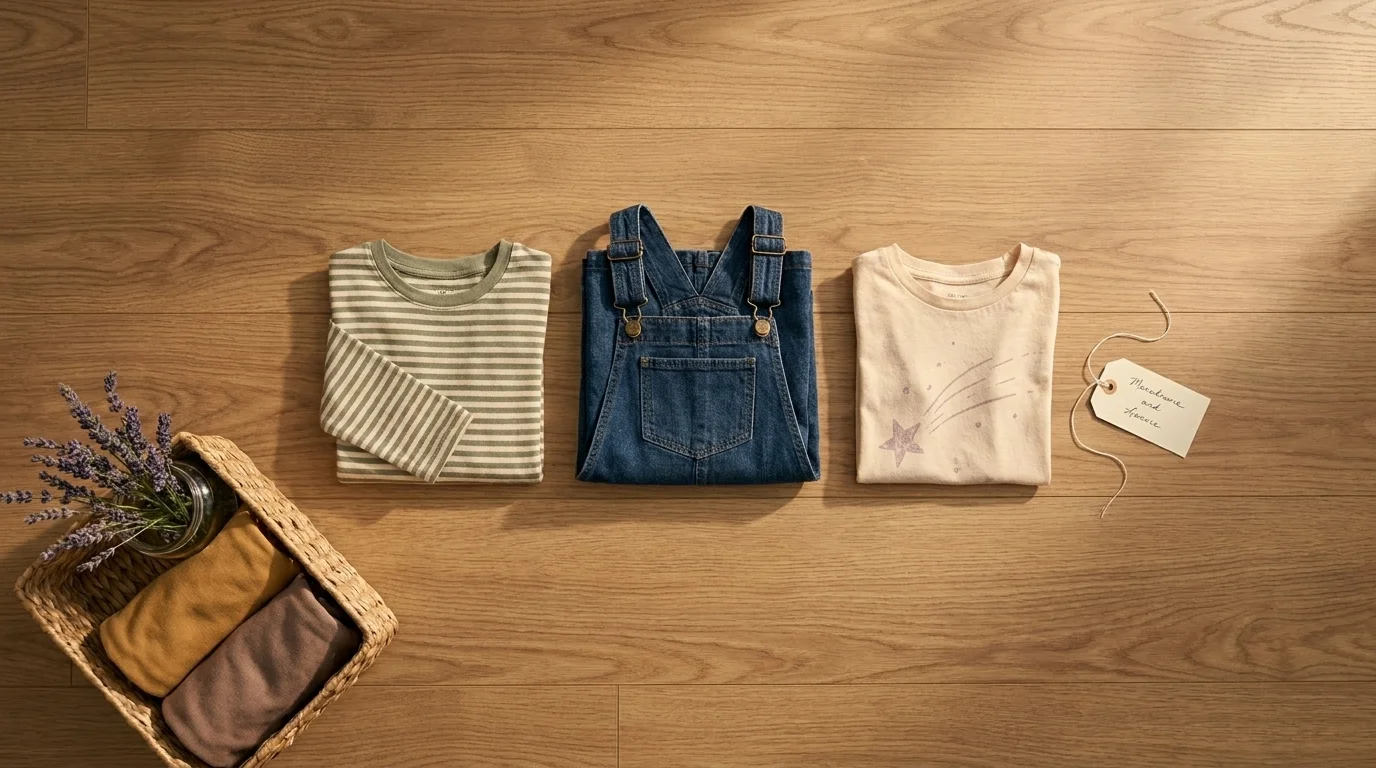
If you take only one practical step from this piece, make it the conversation. Pick the next clothing request your child brings you — the next trend, the next "everyone has this", the next TikTok pull — and walk through the three-step framework on it. Name the value behind the want. Check the specific object against your family's standards. Offer a redirect if it fails. Do it once, calmly, and the next request will go more easily because the script is in place.
That is the small thing. The larger thing is that kids fashion in 2026 is, more than at any point I have written about it, an honest test of what a household values. The trends are not the threat. The trends are the prompt.
Frequently Asked Questions
The 2026 retail trend taxonomy points to oversized comfort-first silhouettes, sustainable organic materials, gender-neutral cuts, everyday sparkle and graphic prints, soft-pastel and earth-tone palettes, and family-matching sets. The structurally important ones are sustainable materials, gender-neutral construction, and oversized comfort fabrics — the rest are texture, not architecture.
Treat the request as a conversation, not a yes/no. First, name the value behind it out loud — belonging, identity, being legible to a friend group is a normal tween want. Second, check the specific object against your family's age-appropriate standards (modesty, dress code, fit for the developmental stage). Third, if it fails, offer a redirect that meets the same social want with a different object — a longer cropped sweatshirt instead of a cropped top, tinted lip balm instead of full makeup.
Four substantive things, beyond marketing copy. Adaptive clothing with magnetic closures, side zips, sensory-friendly seams and wheelchair-friendly cuts (Tommy Adaptive, Target Cat & Jack Adaptive). Neurodivergent-friendly construction — tag-free seams, flatlock stitching, soft hand-feel (Primary, Hanna Andersson, Pact). Genuine size diversity with broader ranges arriving in children's clothing. And gender-neutral cuts treated as construction (straight side seams, neckline that fits across builds), not just grey colour palettes.
The market data says parents are increasingly answering yes. 55% of millennial parents now choose sustainable fabrics for kids' wear, up 20 percentage points from 2020; second-hand kids clothing apps grew 59% in 2023; eco-friendly packaging influences 52% of purchase decisions. The practical case is hand-me-down logic — buying fewer, better, GOTS or OEKO-TEX certified pieces in slightly larger sizes for sibling or cousin sharing typically costs less per wear than fast-fashion rotation. Source: Gitnux Children's Clothing Market Statistics 2026.
Toddler (1-3) calm starting points: Hanna Andersson, Pact, Primary, Target Cat & Jack. Early-school (4-8) budget: Old Navy, Target Cat & Jack, Janie and Jack; mid-tier: Hanna Andersson, Mini Boden. Tween (9-12) tween-specific: Hayden Girls, Mini Rodini, plus the better small brands. Adaptive needs at any age: Tommy Adaptive, Cat & Jack Adaptive. These are editorial mentions, not affiliate picks.
The decision frame shifts twice. Toddler (1-3) is fully parent-curated with the child offering colour and texture opinions but no real veto. Early-school (4-8) is parent-curated with the child weighing in — the band where the trend list above starts to matter. Tween (9-12) is the band where the wheel turns: the child drives, the parent gatekeeps, and the parent's job is to gatekeep on values rather than on object.