Reweaving the Fabric of Family Communication: A Historical Perspective


My oldest asked me a hard question in the car last week, and I gave him the kind of answer my own father would never have given me — not because my father was a hard man, but because he was handed a script for talking to his sons that had most of the important words left out. That's the thing I've come to believe about family communication after twelve years of sitting across mediation tables from people who loved each other and couldn't say so: it isn't a fixed inheritance. It's a set of skills, and you can learn the ones your own family never taught you. This is a guide to doing exactly that — what good family communication actually is, why it matters more than we tend to admit, and the specific, teachable things that make it better.
Why it matters more than we admit
It's easy to treat "talk to each other more" as a soft, optional virtue. The research doesn't treat it that way. Family communication patterns predict the quality of parent-child attachment and even a child's overall quality of life (PMC, 2025) — meaning the way you talk at home isn't decoration on top of the relationship, it largely is the relationship.
It also does protective work you can measure. In a 2025 study of early adolescents, 16.2% were classified as potential or high-risk problematic smartphone users; academic-achievement pressure raised those odds, while strong family communication lowered them and softened the link between the two (PMC, 2025). Put plainly: the kid who can talk to you is less likely to disappear into a screen when the pressure mounts. The conversation is the steadying. I find that more instructive than frightening — it tells you the lever is real and it's in your hands.
The four ways families talk — and which one is yours
Here's a framework most of the advice online skips, and it's worth knowing because it names the water you're swimming in. Researchers studying Family Communication Patterns — the model originated by McLeod and Chaffee and reformulated by Koerner and Fitzpatrick in 2002 — map families along two dimensions (Routledge):
- Conversation orientation — how freely and openly the family talks: are all topics on the table, or only some?
- Conformity orientation — how much uniformity and hierarchy is enforced: is there one right view (usually a parent's), or room to disagree?
Cross those two and you get four family types:
- Consensual (high conversation, high conformity) — lots of open talk, but within a clear hierarchy; parents explain their decisions but still expect to be the final word.
- Pluralistic (high conversation, low conformity) — open debate, everyone's view genuinely counts, decisions are negotiated.
- Protective (low conversation, high conformity) — little open discussion, strong emphasis on obedience; "because I said so."
- Laissez-faire (low conversation, low conformity) — not much talk and not much hierarchy either; members largely go their own way.
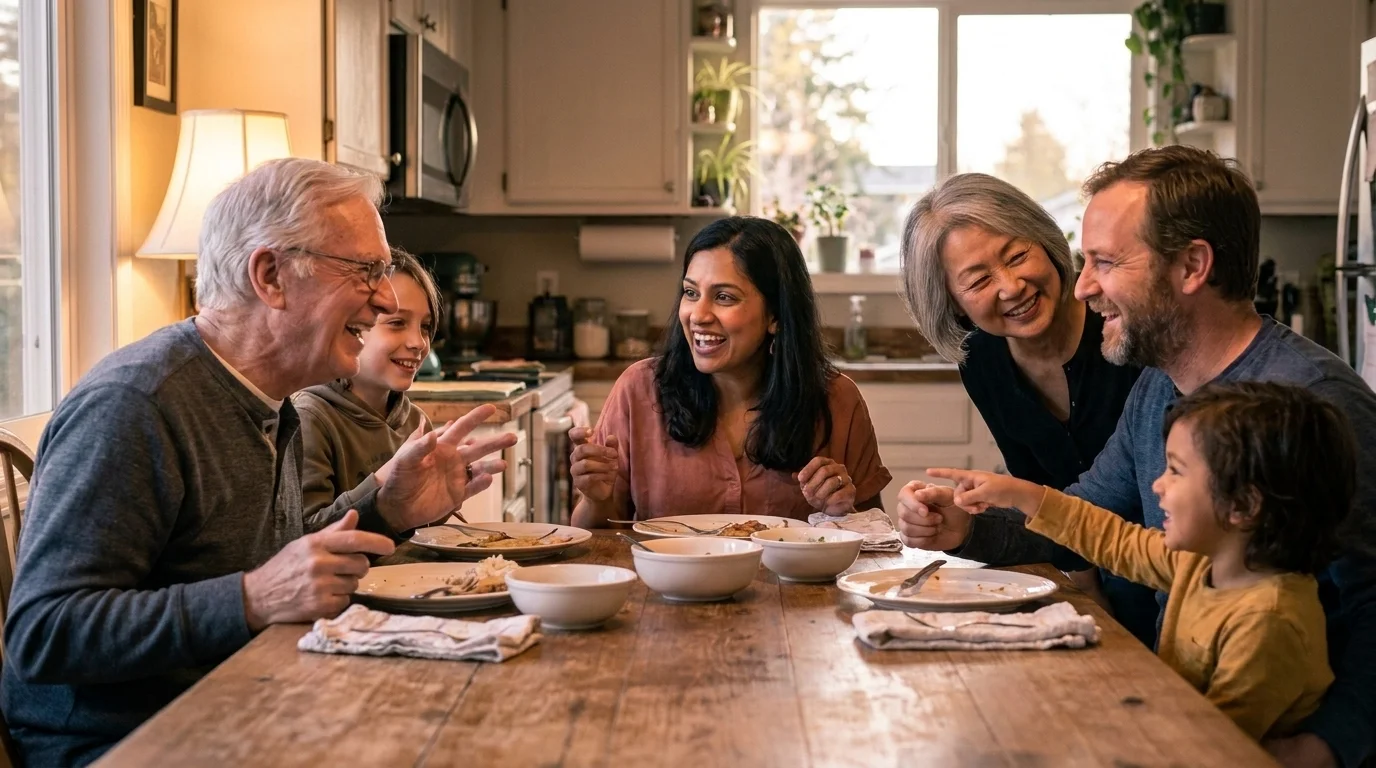
I grew up somewhere between protective and laissez-faire — a Cork household where the conformity was assumed and the conversation was thin, and where my grandfather's silences were a form of love nobody had taught him to translate. The home I'm raising my own children in is deliberately more pluralistic, and that shift wasn't an accident; it was me trying to break with the script. None of these four types is a verdict, by the way. They're a starting position. The point of naming yours is that you can then decide, consciously, which dial you want to turn.
Where it breaks down
Before the skills, the barriers — because most communication problems in families aren't a lack of love, they're a handful of recurring habits. The common ones, named plainly (Unity Therapy Services):
- Poor emotional expression — feeling something strongly and saying something unrelated, or nothing.
- No real listening — waiting for your turn to talk instead of taking in what was said.
- Assuming instead of asking — deciding you already know what the other person means, and responding to that instead of to them.
- Disrespectful or aggressive language — contempt, sarcasm, raised voices that make the other person defend rather than hear.
- Interrupting — which tells a child, every single time, that their sentence matters less than yours.
I've done all five, most of them in the same bad evening. The useful reframe isn't to feel guilty about them; it's to notice they're habits, which means they're replaceable.
The skills that actually help
This is the part worth slowing down on, because it's where intention turns into practice. None of these is complicated. All of them are hard in the moment you most need them — which is exactly why naming them helps. The set that shows up consistently across clinical and pediatric guidance (HealthyChildren.org / AAP, AMU):
- Active listening. Paraphrase back what you heard before you answer. "So you're upset because I said no to the sleepover and didn't explain why — is that it?" It costs ten seconds and it tells the other person they were actually received.
- Use "I" statements, not "you" statements. "I feel ignored when phones come out at dinner" lands as information. "You never put your phone away" lands as an attack, and the conversation becomes a defence. Same content, opposite outcome.
- Take turns during conflict. When it heats up, one person speaks, the other listens to understand — not to rebut — and then you swap. It feels artificial for about a minute and then it works.
- Stay solution-focused. Spend the energy on "what do we do now" rather than relitigating who was wrong. Children learn from this that a conflict is a problem to solve together, not a fight someone has to lose.
- Protect distraction-free time. It can be as little as ten minutes a day with the screens down. The point isn't quantity; it's that the channel stays open, so that when something big arrives, there's already a place to say it.
- Regulate yourself before you respond. This is the one I'd put first if I could only keep one. The pause between feeling the surge and opening your mouth is where almost all the damage is either done or avoided. My father's generation called it self-control; what it actually is, is the willingness to not pass your own bad moment down the line.

Talking across distance, screens, and changing households
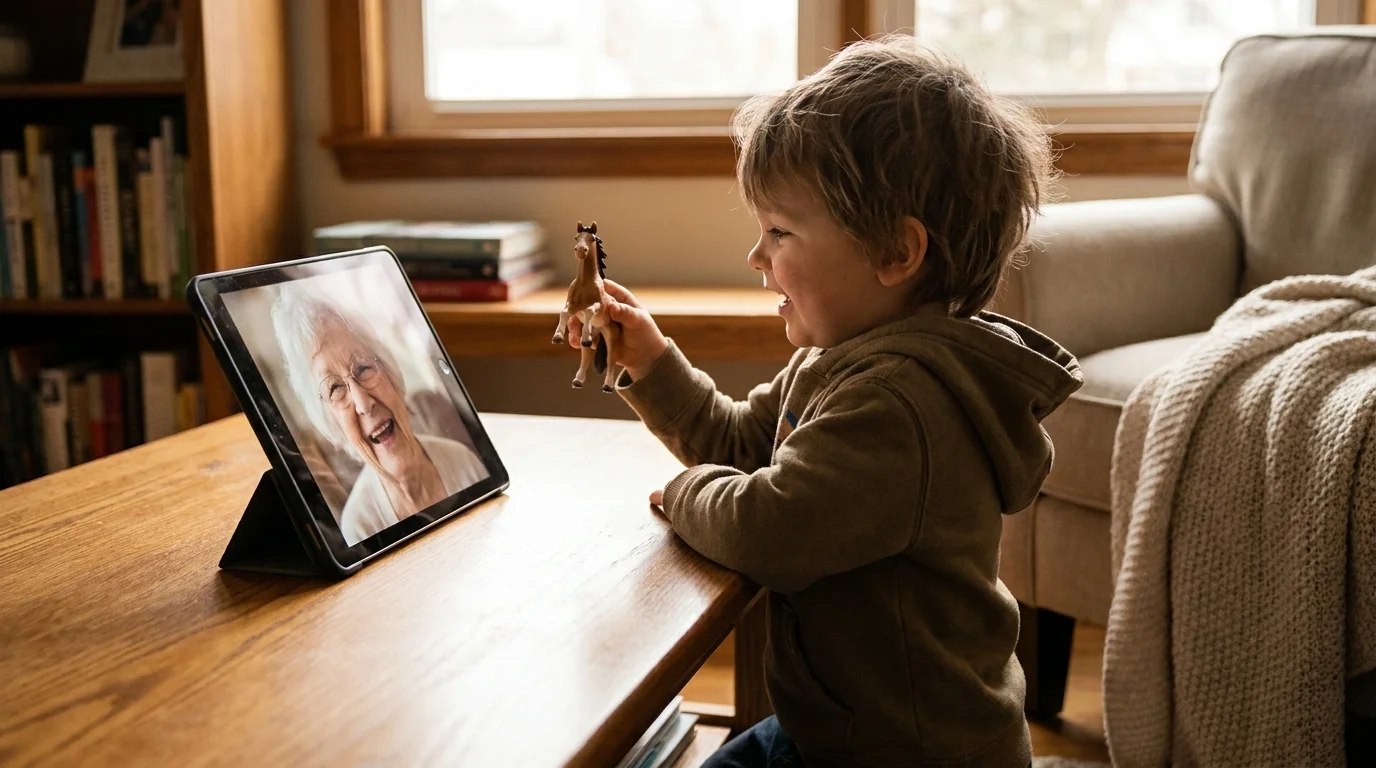
The tools have changed enormously — and this is the part the original version of this guide dwelt on, so I'll keep it short. We went from handwritten letters and a single landline in the hall to instant messaging, social media, and video calls that let a grandparent in Cork watch a grandchild in Melbourne lose a tooth in real time. Each tool added reach and removed something too: immediacy without presence, frequency without depth. The honest answer isn't to romanticise letters or to demonise screens. It's that no channel communicates for you — a video call with nothing real said is as empty as a silent dinner.
Worth saying plainly: the family this guide is for is not the family of 1950. Married adults are now around 46% of the U.S. population, down from roughly two-thirds in 1950, and the nuclear household is no longer the default (Barna, 2025). Single-parent homes, blended families, multigenerational houses — the communication skills above work in all of them, because they were never really about household structure. They're about whether the people in the house feel heard.
The handover
What I'm trying to do with my own children, in the end, is a handover — keep the steadying my father knew how to give, and add the words he didn't have. That's the whole task. You inherit a way of talking, you notice where it failed you, and you hand your kids a slightly better one, knowing they'll do the same with theirs. Pick one skill from the list above — just one — and try it tonight. The script isn't fixed. You're allowed to rewrite the next line.
Frequently Asked Questions
Family Communication Patterns Theory (Koerner & Fitzpatrick, 2002) describes four types based on conversation and conformity orientation: consensual (high both — open talk within a clear hierarchy), pluralistic (high conversation, low conformity — open, negotiated), protective (low conversation, high conformity — obedience-focused), and laissez-faire (low both).
Strong family communication predicts better parent-child attachment and higher child quality of life, and it acts as a protective factor — for example, 2025 research found it lowered the odds of problematic adolescent smartphone use even under academic pressure.
Frequent barriers include poor emotional expression, not really listening (waiting to talk instead of taking in what was said), assuming instead of asking, disrespectful or aggressive language, and interrupting. These are usually habits rather than a lack of care — which means they can be replaced.
Use active listening (paraphrase before you answer), speak in 'I' statements instead of blaming 'you' language, take turns during conflict, stay solution-focused, protect distraction-free time (even ten minutes a day), and regulate your own emotions before responding.
An 'I' statement describes your own feeling and its trigger — 'I feel ignored when phones come out at dinner' — instead of accusing — 'you never put your phone away.' The first lands as information the other person can respond to; the second triggers defensiveness and turns the conversation into a fight.
Yes. With the nuclear family no longer the default — married adults are now about 46% of U.S. adults versus roughly two-thirds in 1950 — these skills apply equally to single-parent, blended, and multigenerational homes, because they're about whether people feel heard, not about household structure.