Reimagining Retail: Family-Centric Companies Pioneering Inclusive Shopping Experiences


Here is the scene retail keeps designing for: a parent, a toddler mid-meltdown, a cart, and a checkout line that does not move. Most of what gets sold to that parent as "innovation" is decoration. Some of it genuinely changes the math of a shopping trip. The honest job of this piece is to tell you which is which.
Retail innovation is the adoption of new technology, store formats, and service models — AR try-on, AI personalization, sensory-friendly hours, experiential stores — that change how, where, and how comfortably people shop. The baseline has already moved: 93% of retailers have automated at least one part of the business, from inventory to self-checkout (Square, 2025). Automation is table stakes now, not an edge. And shopping keeps shifting online — U.S. non-store sales were projected to grow 7–9% to roughly $1.5–1.6 trillion in 2025 (Deloitte, 2025). So the interesting question for a family isn't whether retail is changing. It's which of these changes actually buys back time, money, or sanity.
The store floor: where design quietly does the work
The cheapest, least glamorous innovations are often the ones that matter most to a parent, because they remove friction instead of adding features.
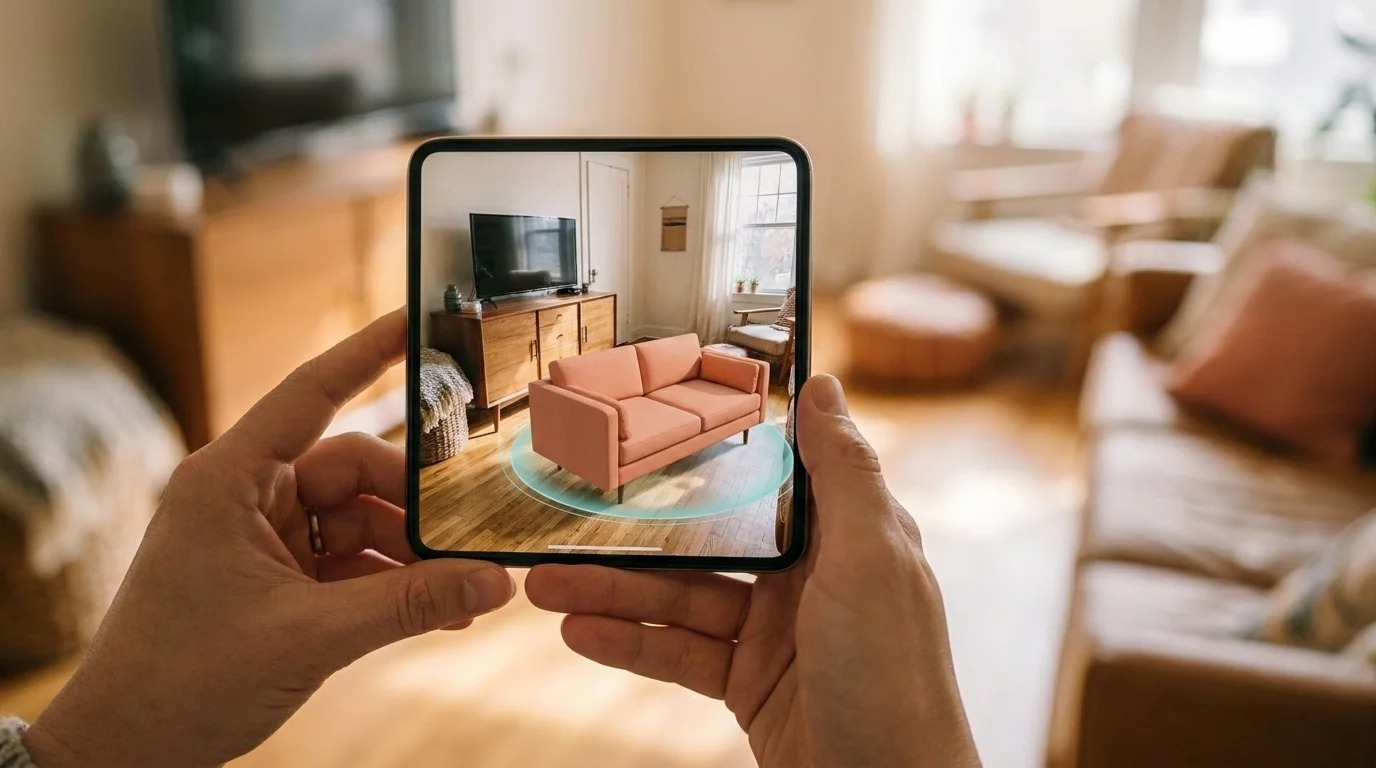
Start with sensory-friendly shopping — and this is the part I want to be specific about, because it's the rare case where a national retailer made a structural change rather than a marketing one. Walmart now runs sensory-friendly hours daily from 8 to 10 a.m. across all of its roughly 4,500 U.S. stores: radio off, lights dimmed where possible, and the TV wall switched to a static image. It started as a 2023 pilot and was made permanent and nationwide with no end date (Retail Dive, 2024). For a family with a child who has sensory processing sensitivities, that is not a nice-to-have. It is the difference between a trip that's possible and one that isn't.
The older version of the same idea is supervised play. IKEA built its entire store as a "family outing" decades ago, with Småland — a staffed, free play area where you can leave young children while you walk the showroom (IKEA). The mechanism is the same in both cases: the store absorbs a cost (staff, dimmed lights, lost early-morning ambience) so the parent doesn't have to absorb it as stress. Wider aisles, nursing rooms, and a place to park a stroller belong in the same category — unglamorous, structural, and the things parents actually remember.
Try before you buy: AR, virtual showrooms, and the part that pays for itself
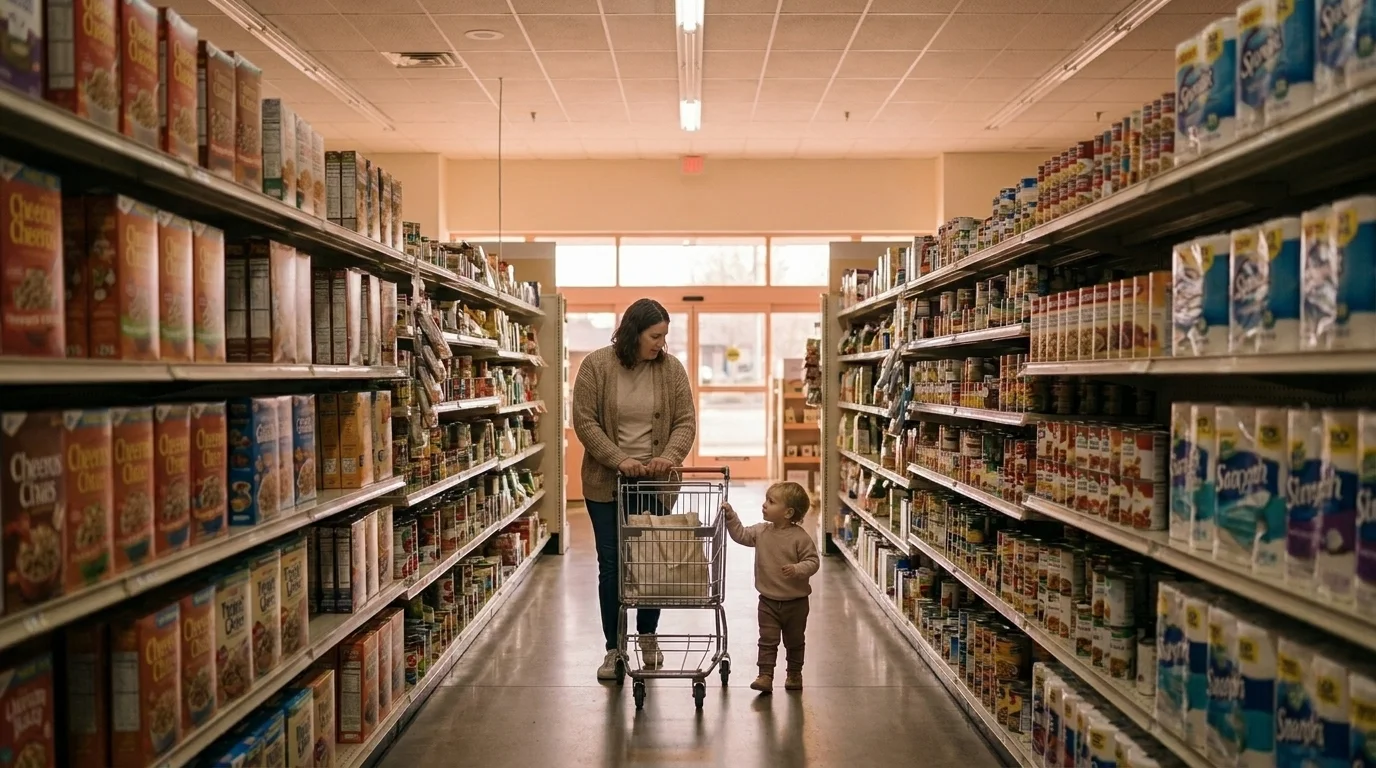
Online shopping for families has a structural problem: you can't touch anything, and returns are a tax on your time. Augmented reality is the innovation aimed squarely at that problem, and unlike a lot of retail tech, it has adoption numbers behind it rather than press releases.
The behaviour is already mainstream in the categories where fit and look matter most. 34% of beauty shoppers — and 69% of Gen Z cosmetics buyers — have used an AR filter to preview a product on themselves before buying (Square, 2025). The reason retailers are spending on it is that it moves two numbers at once: AR has been found to lift conversion by roughly 40–94% depending on the study, and to cut product returns by about 25–40%, with 65% of shoppers more likely to buy after interacting with an item in AR (REYDAR, 2025). The returns figure is the one I'd put a dollar value on if I were a parent — fewer returns means fewer boxes, fewer trips to the drop-off, fewer evenings lost to a process that produces nothing.
The market is pricing this as a real shift, not a fad: the AR shopping market was valued at about USD 6.3 billion in 2025 and is forecast to reach USD 74 billion by 2035, a 28% compound annual growth rate (Future Market Insights, 2025). Virtual showrooms — interactive catalogues that let a family browse and visualize products at home — sit in the same bucket. The honest read is that AR is past the gimmick stage for clothing, cosmetics, glasses, and furniture, and still mostly theatre everywhere else.
Who's actually doing this — the real version of the case study
It's easy to write about pioneering brands in the abstract. It's more useful to name them, because the specifics tell you what each innovation costs and what it returns.
- Walmart and Target run sensory-friendly hours — the accessibility innovation with the widest reach, because it scales across thousands of existing stores at near-zero capital cost.
- IKEA treats the store as a destination, with Småland play areas and a showroom built for a half-day family visit rather than a quick grab (IKEA).
- Build-A-Bear is the experiential model taken to its logical end: the product is the activity. Its Heart Ceremony — where a child completes their stuffed animal as a small ritual — turns a transaction into the reason for the visit (Jumpmind).
- Amazon and Warby Parker are the AR/virtual-try-on reference points — glasses and products you can preview on yourself or in your room before committing.
What these share isn't a technology. It's a willingness to spend on removing a specific friction — noise, boredom, the risk of buying the wrong thing — that a family feels acutely and a single shopper barely notices.
Service and policy: the things parents quietly grade you on
The service layer is where intentions get tested. Extended return windows, family parking, expedited or self-checkout lanes, and staff trained to actually help rather than hover — these are policy choices, and parents notice the gap between the brochure and the experience faster than any other customer segment, because they're operating under time pressure with a witness who narrates everything.
The useful distinction is between policies that cost the retailer something real (longer returns, dedicated staff) and ones that are just signage. AI-driven chatbots and personalized recommendations sit awkwardly here: when they shorten the path to the right product, they help; when they're a deflection layer between a frustrated parent and a human, they're friction wearing a helpful mask. Worth watching which one you're actually being handed.
What's next: the agentic-AI year, and why I'd hold my wallet
If you want the honest forecast for the future of retail, 2026 is being called the year of agentic AI — autonomous shopping agents that browse, compare, and transact on your behalf. Forrester predicts 1 in 4 shoppers will use a specialty retail chatbot in 2026, while Bain notes that about half of consumers remain cautious about handing over fully autonomous purchasing (Retail Customer Experience, 2026).
That caution is rational. An agent that reorders nappies before you run out is genuinely useful. An agent authorized to buy on your behalf is a different proposition, and the gap between those two is exactly where I'd want to read the fine print before opting in. The pattern holds across every innovation in this piece: the version that saves you a known, repeated task is worth adopting early; the version that asks you to surrender judgment is worth letting other people beta-test.
What this means for you
Sort the noise by one question: does this innovation remove a friction you actually feel, or does it add a feature you didn't ask for? Sensory-friendly hours, AR try-on for fit-sensitive purchases, and supervised play are in the first column — they buy back time, returns, or a calmer trip, and the figures back that up. Most of the rest is decoration, and a fair amount of the agentic-AI wave is still a promise rather than a delivery. You don't have to adopt all of it. You have to recognize which one is being sold to you, and price it honestly against what it gives you back.
Frequently Asked Questions
Retail innovation is the adoption of new technologies, store formats, and service models — from AR try-on and AI personalization to sensory-friendly hours — that make shopping more convenient, immersive, and inclusive. As of 2025, 93% of retailers had automated at least one part of the business, so the edge now comes from innovations that remove real friction for shoppers.
Walmart and Target (sensory-friendly shopping hours), IKEA (supervised Småland play areas), Build-A-Bear (the experiential Heart Ceremony), and Amazon and Warby Parker (AR and virtual try-on) are widely cited real-world examples of family-centric retail innovation.
Yes. Studies report that AR lifts conversion by roughly 40–94% and cuts product returns by about 25–40%, with 65% of shoppers more likely to buy after interacting with an item in AR. Adoption is already mainstream in beauty, where 34% of shoppers — and 69% of Gen Z cosmetics buyers — have used an AR filter before purchasing.
Sensory-friendly hours are set times when a store dims its lights, turns off music and radio, and reduces visual noise to make shopping easier for people with sensory sensitivities. Walmart now runs them daily from 8 to 10 a.m. across all of its roughly 4,500 U.S. stores as a permanent program.
2026 is widely called the year of agentic AI — autonomous shopping agents that browse, compare, and buy on a shopper's behalf. Forrester predicts 1 in 4 shoppers will use a specialty retail chatbot in 2026, though Bain notes about half of consumers remain cautious about fully autonomous purchasing.
Online retailers use virtual showrooms, interactive catalogs, and AR try-on so families can visualize products at home before buying. This makes browsing more engaging and, by aligning expectations with reality, reduces the returns that cost busy parents the most time.