The Evolution of Tech-Infused Maternity Wear: Balancing Style and Functionality


There is a particular morning in early pregnancy when you reach for the leggings you have worn through three winters and find that they no longer recognise you. The waistband has not changed; you have. It is, in its small way, the first sign that the body has begun a conversation with itself that you will not be able to fully overhear. The wardrobe is the place that conversation first becomes visible.
Maternity activewear is one of the practical answers to that morning, and it is also a category in which the marketing has, over the last few years, become noisier than the underlying product warrants. The maternity activewear market is forecast to reach roughly USD 8.45 billion in 2026 and to roughly double, to USD 14.57 billion, by 2036 (Future Market Insights via OpenPR). Around 46.2% of those sales are online. Cotton still accounts for about 41.1% of the materials used; the technical synthetics (recycled nylon, elastane, TENCEL, modal) are the growth segment. Leggings, tops, and bras together make up about three-quarters of what is sold. I list these numbers not because the body that needs the clothes cares what they are, but because the marketing language around the category — innovation, evolution, revolution — outruns the underlying truth, which is that the question facing most pregnant readers is small, repeated, and practical: what should I actually buy.
A Quiet Correction
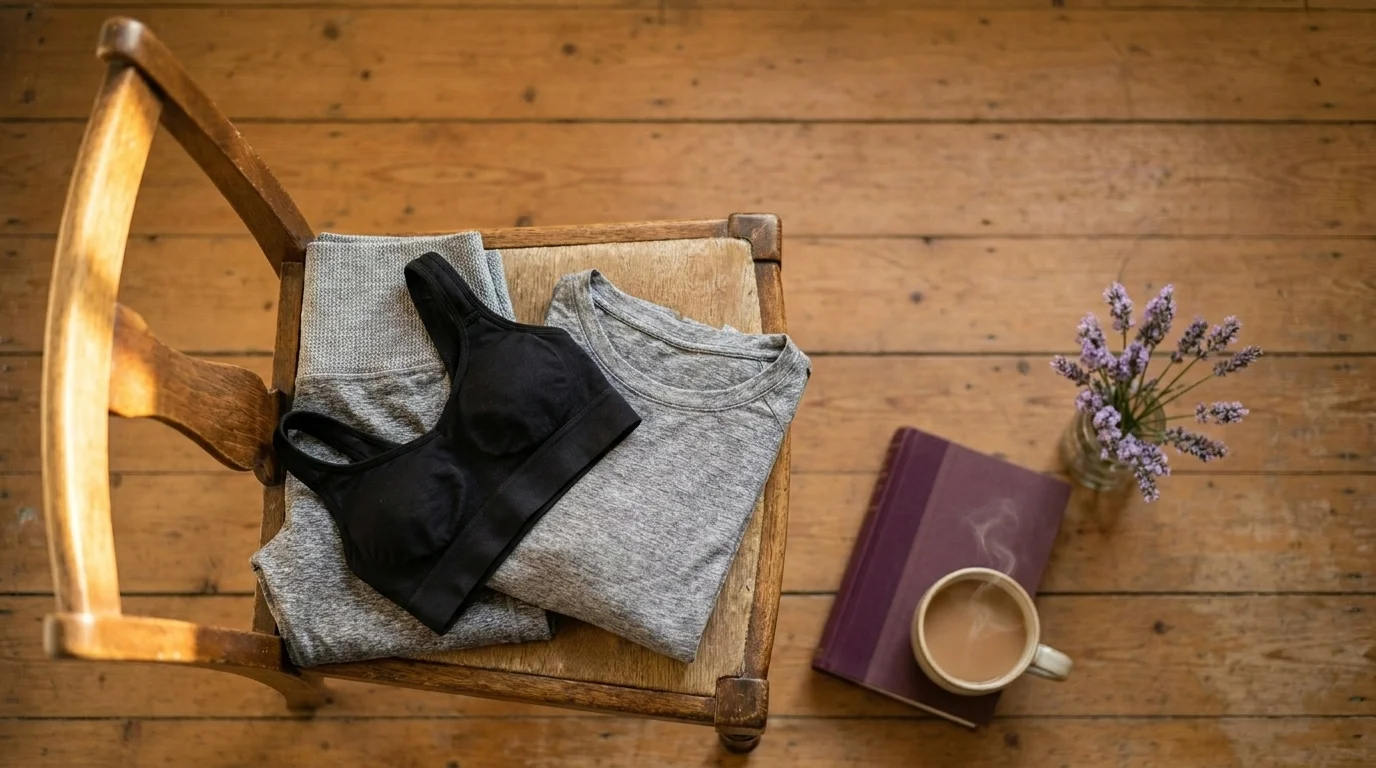
The original premise of this piece, written some years ago, assumed a near-future in which pregnancy clothing would contain embedded biometric sensors — fabric that read heart rate, contractions, and temperature in the way that a watch does now. It is worth saying clearly, because I do not want to repeat the claim: this is not yet a real product category at retail scale. No mainstream maternity activewear brand currently ships embedded biometric sensors. The wearable-tech work in pregnancy lives, as of 2026, in discrete devices that sit on the wrist or in a chest band — Owlet's pregnancy band, Bloomlife's contraction monitor, the Oura ring's pregnancy mode — and not in the clothes themselves. The clothes are still mostly fabric. The interesting questions are what kind of fabric, in what shape, and for which weeks.
I have come to think of this less as a disappointment than as a correction. The pregnant body does not need its clothes to talk back to it. It needs them to fit, to move with it through one of the more startling shape changes a body can undergo, and — if there is any honesty in the category at all — to be wearable for more than the forty weeks during which they are nominally required.
What the Words on the Label Actually Mean
When you stand in front of a maternity activewear page and read the product copy, you encounter a small vocabulary that the brand pages explain only partially. The Marie Claire UK 2026 round-up of best maternity workout clothes — itself a piece of editorial worth reading if you want to see the field laid out — tested eight brands across that vocabulary, but the testing protocol does not always survive contact with a reader who is buying a single pair of leggings online at eleven at night (Marie Claire UK). It seems worth defining the terms in plain English.
Moisture-wicking means the fabric pulls sweat away from the skin to the outer surface of the garment, where it can evaporate. It is the single most-named feature in the category and it has an unadvertised expiry date: in most synthetics, the wicking treatment degrades after roughly twelve to fifteen washes if the garment is washed with fabric softener or in hot water (Alibaba 2026 maternity buying guide). The garment continues to look the same. It simply stops doing the thing you paid for.
Four-way stretch means the fabric extends both lengthwise and crosswise without losing its shape on relaxation. For a pregnant body this matters more than it does in non-pregnancy activewear; the shape it must return to is, week by week, not the shape it had a fortnight ago. Beyond Yoga's Spacedye fabric — 87% polyester and 13% spandex, with the four-way stretch and the quick-drying and the shrink-resistance the brand specifies in its fabric guide — is the most commonly cited example, and the line called Beyond The Bump is built on the premise that the same garment, sized to pre-pregnancy, can be worn into pregnancy and back out of it (Beyond Yoga fabric guide; Beyond Yoga Maternity Collection).
Compression panel means a section of fabric (often the lower back, sometimes the belly support) sewn at a tighter weave so it presses gently against the body. Activewear compression is light. Medical-grade pregnancy compression, as the supply-chain literature defines it, is in the 15-20 mmHg or 20-30 mmHg graduated range — a category sold under prescription as hosiery, not as activewear (Befitting You compression insights). A maternity legging that markets "compression support" is in the much lighter range. This is not a criticism. It is what to expect.
Seamless construction means the garment has been knitted in the round rather than cut and sewn, so the panels meet without an inside seam. This matters less in early pregnancy and more in the third trimester, when a seam at the wrong height across a growing belly stops being something the body can ignore.
The Long Middle of the Pregnancy
Pregnancy is conventionally divided into three trimesters; in clothing terms the divisions matter less than you might expect, and the changes happen at their own pace. What follows is the rough shape, in prose rather than checklist, of what most readers find they need.
The first trimester rarely demands maternity-specific activewear. The body is changing, but mostly inside; what shows is breast tenderness and a low-grade fatigue that the wardrobe cannot fix. Most women find that sized-up regular leggings and a softer, more supportive sports bra cover the first ten or twelve weeks. The bra is usually the first purchase. Kindred Bravely, which makes nursing-friendly and pregnancy-through-postpartum pieces in a wide size range, is the calmest entry point here.
The second trimester is the one in which most women cross over to maternity-specific activewear. The line is not a date; it is the morning the waistband presses against the lower abdomen and the wearer realises she has been holding her breath for an hour. The choice at this stage is between over-belly and under-belly — a full panel that rises above the bump or a soft band that sits beneath it — and both have constituencies. Beyond Yoga, Ingrid+Isabel, and Seraphine all sell well in this stretch. Beyond Yoga's Beyond The Bump pieces lean toward the wear-it-after-too logic. Ingrid+Isabel is mid-tier and known for its belly-band; Seraphine's over-bump fits suit a longer torso.
The third trimester is where the category genuinely earns its existence. A full-panel waistband becomes, for most women, non-negotiable; a wide soft elastic that does not roll down across the bump; sometimes a silicone strip across the lower back that nudges lumbar support. Blanqi specialises in this end of the curve and is the brand most often cited by women in their final weeks. The leggings are not the only purchase: a supportive bra that accommodates further breast change, and a top that is long enough at the front, both matter.
Postpartum is the stage maternity activewear copy talks about least and most readers care about most. Gentle compression for recovery, nursing-friendly construction at the bra and top, and — crucially — sizing flexibility that does not punish a body that is still recomposing itself. Beyond The Bump's pre-pregnancy sizing carries through here; Kindred Bravely's range is built for it. This is also where buying for pregnancy alone, rather than for pregnancy-through-postpartum, will most clearly look like a mistake in retrospect.
A Comparison
The following table is the one structural concession this essay makes to the list-shaped logic of the category. The entries are not exhaustive — Marie Claire UK's 2026 round-up included Seraphine, CRZ YOGA, Vuori, FP Movement, M&S Goodmove, Alo Yoga, Hunza G and Reebok, and any serious buyer's tour of the category would also include Old Navy, Nike, adidas, and a handful of newer specialist labels. The aim here is to summarise what is most often actually bought across a working price spectrum.
| Brand | Price tier | Best for which stage | Signature fabric / feature | Carries postpartum |
|---|---|---|---|---|
| Beyond Yoga | Premium ($$) | Second trimester through postpartum | Spacedye 87/13 four-way stretch; Beyond The Bump line sized to pre-pregnancy | Yes |
| Blanqi | Premium ($$$) | Third trimester | Full-panel leggings with built-in core/lumbar support | Limited |
| Ingrid+Isabel | Mid ($$) | Second trimester | The original "Bellaband" + maternity activewear staples | Some |
| Seraphine | Mid ($$) | Second and third trimester | Over-bump fits, longer-torso cuts | Some |
| Kindred Bravely | Budget-mid ($) | All stages, especially postpartum | Wide size range (XS-3X), nursing-friendly bras + tops | Yes (designed for) |
| CRZ YOGA | Budget ($) | Second trimester | Butterluxe fabric; over-belly maternity leggings | Limited |
| Vuori | Premium ($$$) | Second trimester | AllTheFeels soft-handle fabric; lifestyle-leaning | Yes |
| Old Navy | Budget ($) | Second and third trimester | Affordable maternity activewear basics; very broad sizing | Some |
| Nike / adidas maternity | Mid ($$) | Active second/third trimester | Performance-brand stretch and durability | Some |
| FP Movement | Premium ($$$) | Second trimester | Fashion-leaning maternity activewear; dress and skort options | Limited |
There is no right answer in this list; there is the answer that matches the body, the budget, and the number of months you intend the garments to remain useful.
Tech Around Your Activewear, Not In It
If you came to maternity activewear hoping that a legging might also be a heart monitor, you can let that hope go gently. The pregnancy biometric work is being done by wrist-worn devices and chest bands: Owlet's pregnancy band, Bloomlife's contraction monitor, the Oura ring's pregnancy programme. These pair, as needed, with whatever you are wearing. The activewear is the activewear. The data is on the wrist.
This is, I think, the honest configuration. The body is already doing more than enough work without the leggings also being part of a network.
Care, Longevity, and the Question of What to Throw Away
The single most useful thing one can say about the longevity of maternity activewear is that it is unusually within the wearer's control. Moisture-wicking treatments, as noted, degrade after twelve to fifteen washes if the garment encounters fabric softener or hot water; they last a great deal longer with cold-water washing, a pH-neutral detergent, and air drying (Alibaba 2026 maternity buying guide). The same is true of four-way stretch — heat is the enemy of elastane recovery. The wash routine is, in this category, a meaningful part of the product.
The category-mix statistic from Future Market Insights — about 74% of maternity activewear sales sit in outerwear (leggings, tops, bras) (OpenPR) — is worth pairing with the wear-it-beyond-pregnancy point. A legging that lasts pregnancy and a year of postpartum and a return to regular workouts is no longer a pregnancy purchase; it is a wardrobe purchase that happened to begin in pregnancy. The brands that explicitly size with this in mind (Beyond Yoga, Kindred Bravely, Vuori) are the most defensible buys against the cost-per-wear arithmetic.
A Quieter Note on What Doesn't Matter
Some of the product copy in this category is doing more work than the product. Antimicrobial silver-ion treatments make sense in a hospital setting and have a thin case in casual gym use; the marketing weight they receive does not match the practical difference they make. "Biomechanical" is a word brands use for any garment with a compression panel, and most of the time it means the standard light compression already described. "Smart fabric" — and I write this with some affection for the version of this article it is replacing — is a phrase that should make the buyer ask, smart how, and trained on what. If the answer is "moisture-wicking", it is a fabric that has been competent for a decade.
A Small Note on Compression and Regulation
Two regulatory shifts worth knowing about. The US FDA's 2026 Guidance for Maternal Support Devices has tightened the requirement for third-party biomechanical load testing on compression garments. The EU's Medical Device Regulation has raised the bar on biocompatibility testing for wearable support devices in the same direction (Alibaba 2026 maternity buying guide). For activewear with "support" panels, the practical effect is that branded claims will be more honest than they were three years ago. It is not a reason to spend more. It is a reason to read the label.
A Last Scene
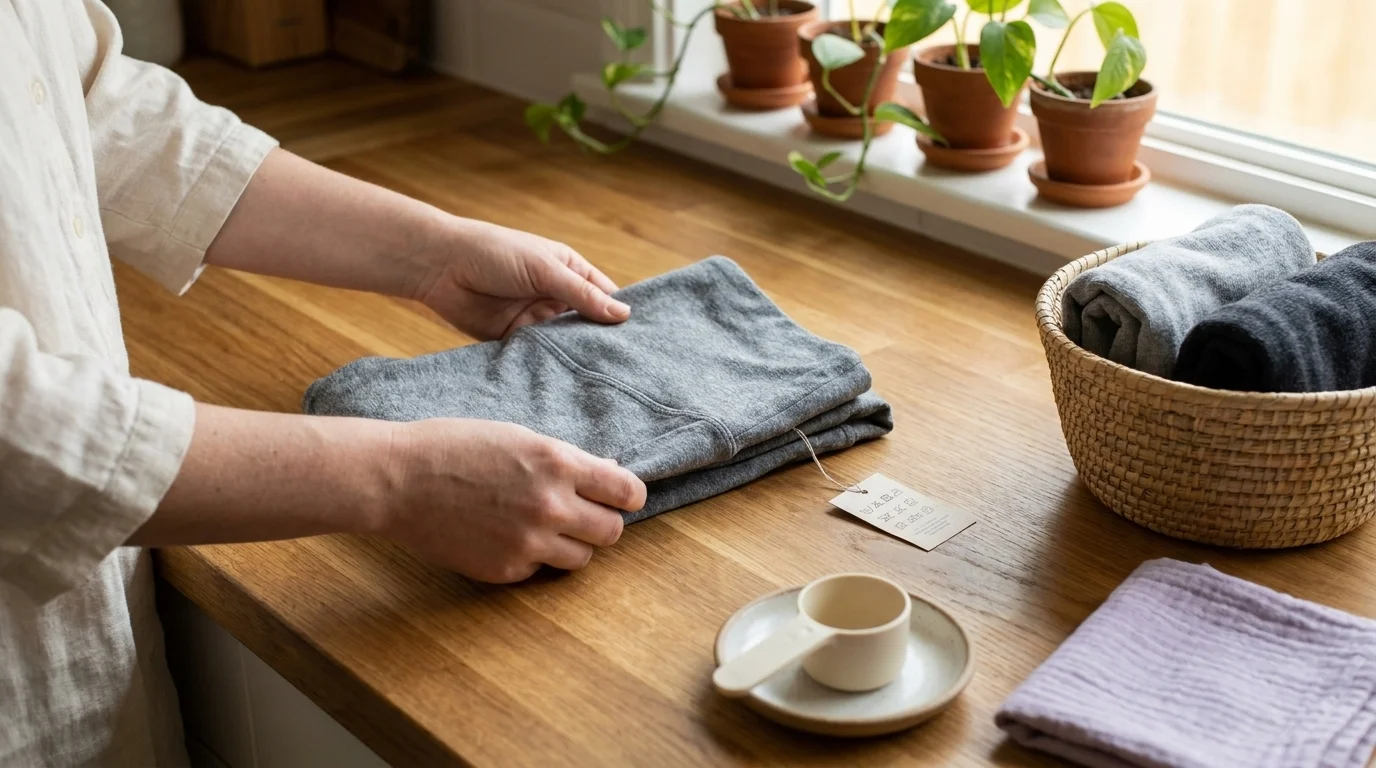
There is a particular evening, somewhere in the second trimester for me both times, when I stood in the doorway of our small bedroom and looked at the chair where the worn-out leggings were folded next to the new ones, and could not, for a moment, tell which body the chair was supposed to dress. The body had already changed. The wardrobe was catching up. The new pieces were good. The old ones were not the enemy; they were the previous version of an answer to a question that had moved.
Maternity activewear, treated honestly, is one of the smaller answers to one of the larger questions of being pregnant: how much of the body's daily comfort is your responsibility to arrange in advance, and how much of it will simply have to be improvised. The category answers the first half. The second half is the rest of the long middle, and no garment in the table above pretends otherwise.
Frequently Asked Questions
First trimester typically works with sized-up regular activewear plus a more supportive sports bra (Kindred Bravely is a calm starting point). Second trimester is when most women move to maternity-specific over-belly or under-belly leggings — Beyond Yoga's Beyond The Bump line, Ingrid+Isabel, and Seraphine are strong picks. Third trimester benefits from full-panel leggings with a wide soft waistband; Blanqi specialises here. Postpartum favours gentle compression and nursing-friendly construction — Kindred Bravely and Beyond The Bump both carry over.
There is no fixed week. Many women stay in sized-up regular activewear through the first trimester and switch in the second trimester when the bump starts pushing against waistbands. Breast tenderness in the first trimester is usually the first signal — an upgraded supportive sports bra often comes before maternity leggings.
A full-panel or over-belly waistband (third trimester non-negotiable), four-way stretch fabric, moisture-wicking treatment (which degrades after 12-15 washes without proper care), a wide soft waistband that does not dig in, and seamless construction that accommodates a growing bump. For sports bras, motion control and adjustability matter more during pregnancy than they do otherwise.
Wash in cold water with a pH-neutral detergent, skip fabric softener (it coats moisture-wicking fibres and kills their performance), and air-dry where possible. Moisture-wicking treatments typically degrade after 12-15 washes, so the wash routine is what extends usable life from a single pregnancy into postpartum and a regular workout rotation.
Embedded biometric sensors in maternity clothing are not a mainstream retail category in 2026. Pregnancy biometric tracking lives in discrete devices — Owlet's pregnancy band, Bloomlife's contraction monitor, the Oura ring's pregnancy mode — that pair with whatever activewear you already wear. The clothes do not yet read the body.
In the first trimester, often not. By the second trimester, a maternity-specific waistband begins to outperform sized-up regular leggings for both fit and comfort, and by the third trimester a full-panel waistband or a properly designed under-belly band is meaningfully different from anything regular activewear offers. Brands that explicitly carry through to postpartum (Beyond Yoga's Beyond The Bump line, Kindred Bravely) make the cost-per-wear arithmetic the most forgiving.