Navigating Parenthood Across Borders: The Impact of Migration on Family Dynamics


My Lebanese-Australian neighbour told me once that his children speak Arabic to his mother and English to everyone else, and that the day his eldest answered his grandmother in English was one of the quietest griefs of his life — a door he hadn't noticed was closing until it had. I've thought about that a lot, raising my own kids between a Cork I left and a Melbourne I chose. Raising bicultural children is not a niche concern dressed up as one. As of 2024, about one in four U.S. children — close to 20 million — had at least one immigrant parent, and 85% of those children were born in their new country (KFF, 2024). This is a mainstream way of growing up. What follows isn't a survey of the migrant experience — it's a working guide to the parts parents actually wrestle with: keeping the heritage language alive, raising a child who's secure in two cultures rather than torn between them, and understanding what the second generation is carrying that we sometimes can't see.
Keeping the heritage language alive
This is the one that keeps parents up, and the one where the advice is usually worst — "just speak it at home" — so let me be concrete. Heritage language is the language of your family's origin that a child is at risk of losing in a new-country, majority-language environment. Holding onto it is less about effort and more about engineering the child's week so the language has somewhere to live.
The tactics that actually work, roughly in order of leverage:
- One-Parent-One-Language (OPOL), or a heritage-language-only zone. Either each parent consistently speaks one language, or you ring-fence a space and time — the kitchen, the dinner hour — where only the heritage language is spoken. Consistency matters more than total hours.
- Make the language carry things the child wants. Books, films, music, games, streaming in the heritage language. The language has to be the route to something fun, not only the route to being corrected.
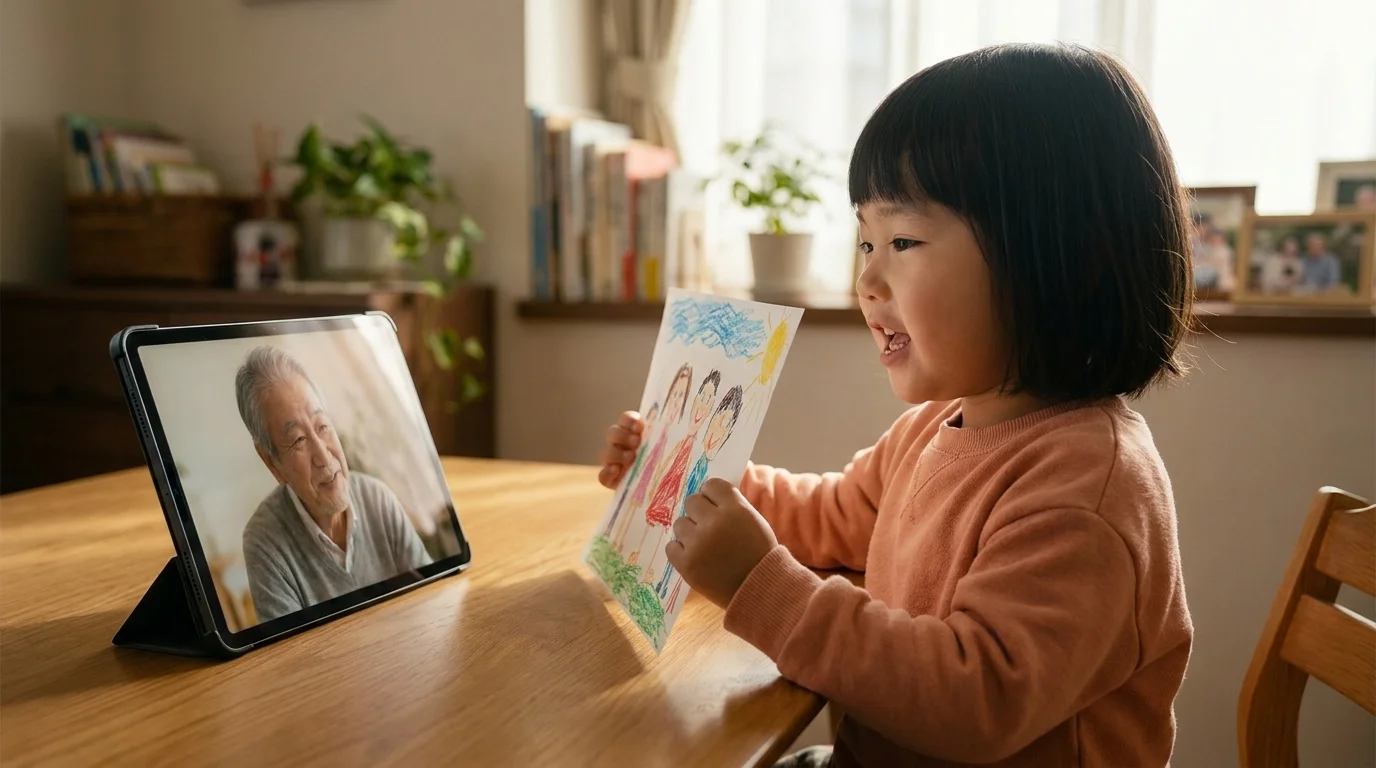
- Use the relatives as a living reason. Regular video calls with grandparents aren't just connection — they're the most motivating language lesson a child gets, because the stakes are real and the love is on the line.
- Build the village around it. Community heritage classes, cultural events, and — if you can — travel to the heritage region. A 2025 reframe in the research is blunt about why this matters: heritage-language maintenance is a collective responsibility, not a home-only chore, and home effort gets quietly undercut when the school and the wider society treat the language as worthless (Frontiers in Psychology, 2025). Digital tools now sit squarely inside this ecosystem too — apps, calls, and heritage-language streaming are documented as core maintenance strategies, not afterthoughts (Journal of Multilingual and Multicultural Development, 2025).
And the honest part, because no one says it: this is emotional labour, and it's now named as such in the research — the guilt when a child answers in the wrong language, the fatigue of holding the line, the persistence required when it feels like you're losing (MDPI Education Sciences, 2025). My neighbour's quiet grief is in that literature now. If you've felt it, you're not failing; you're doing something genuinely hard that the world around you isn't helping with.
The second-generation experience
Here's the part the language guides skip: what it's actually like to be the kid. Second-generation children — born in the new country to immigrant parents — often grow up as translators, mediators, and bridge-builders before they're old enough to choose the job. They navigate identity questions, the weight of a parent's sacrifice, and the particular ache of belonging fully to neither the country on their passport nor the one in their grandmother's stories.
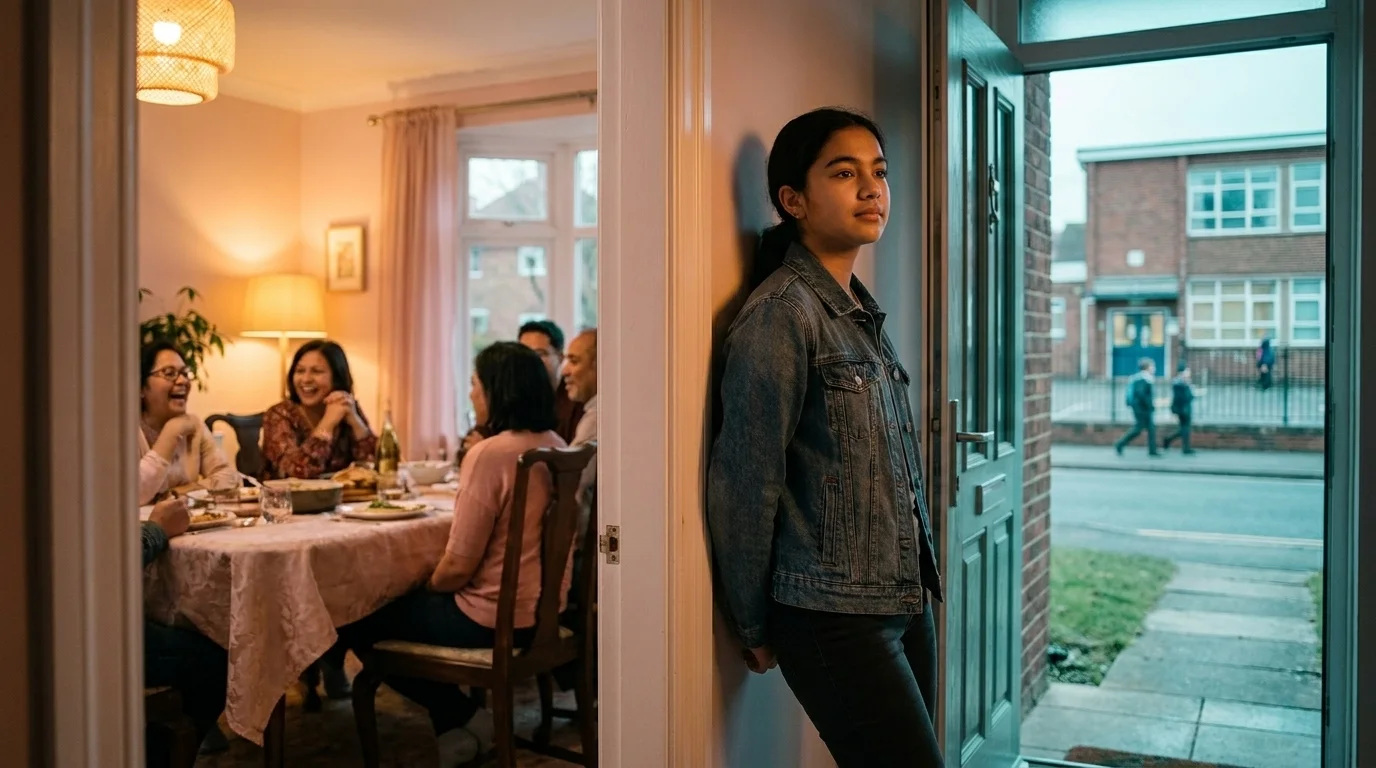
The reassuring finding is that this is survivable, and more than survivable. A 2025 study drawing on the large ABCD dataset of over a thousand second-generation immigrant youth found that these kids showed resilient mental health despite greater exposure to minority stressors — and the key protective factor was holding a strong identity in both cultures at once, not trading one for the other (ScienceDirect, 2025). The thing that protects the child is the both-ness. Which leads directly to the most important reframe in this whole guide.
Why two cultures beats choosing one
The old anxiety — that two cultures will confuse a child, that they should "pick a lane" to fit in — has it backwards, and we now have the numbers. In a longitudinal study of recently-immigrated adolescents, the children with higher bicultural identity integration — who held their heritage and their new culture as one coherent self rather than two warring halves — showed significantly better self-esteem, more optimism, more prosocial behaviour, and notably stronger communication with their parents than the children pushed toward one side (PMC, 2024).
That last item is the one that moves me. Integrating both cultures didn't just help the child privately — it improved how the family talked to each other. It tells you that the work of honouring the heritage isn't a sentimental add-on; it's load-bearing for the relationship. I think of my grandfather in Cork, who'd have found the whole concept baffling, and of how much I'd give to have kept more of what he knew. The job isn't to make a child choose between where they're from and where they are. It's to make those the same sentence.
Traditions, food, and the family across the water
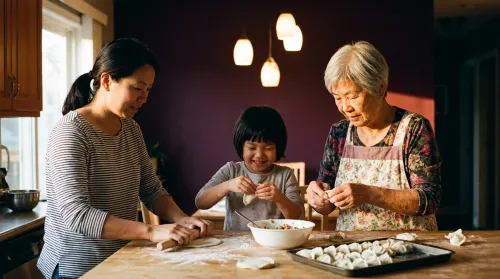
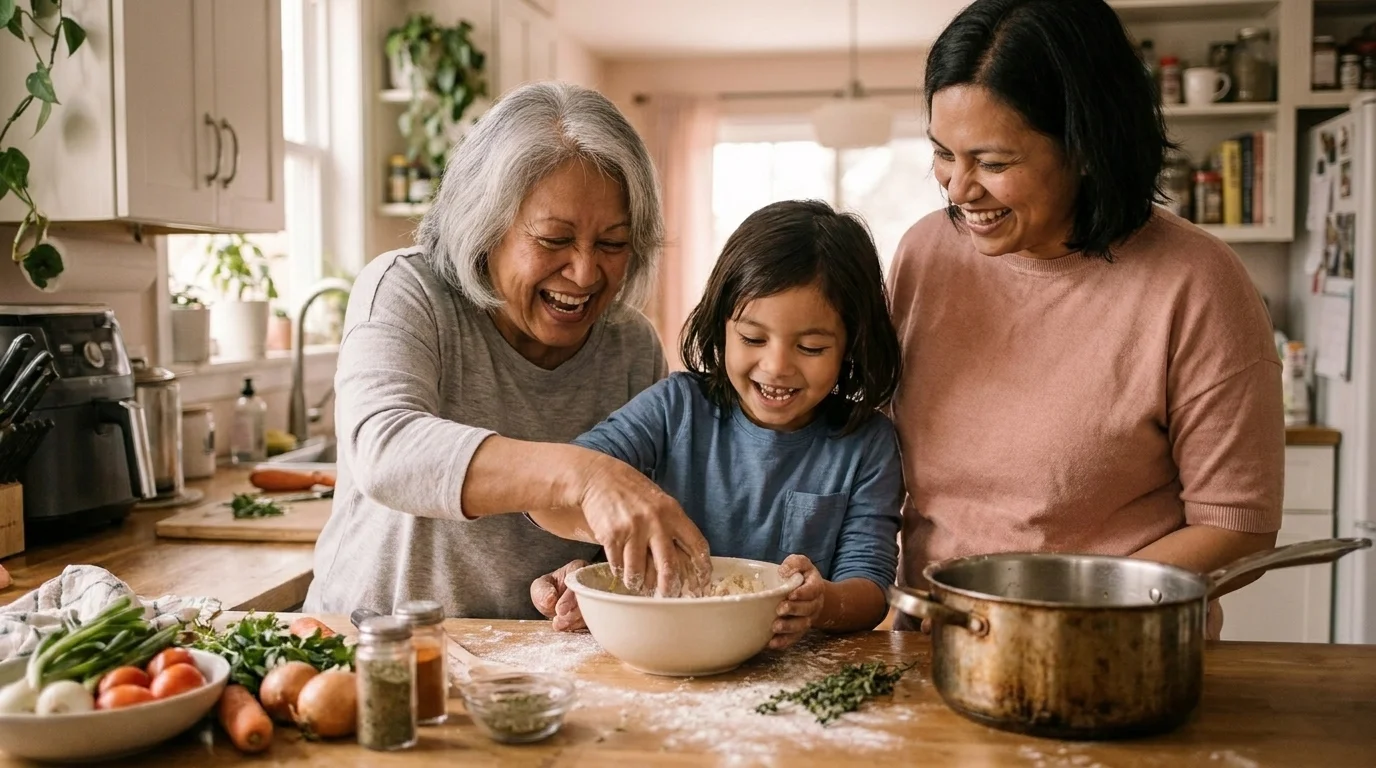
The rest of the bicultural toolkit is smaller but real. Traditions and food are where heritage gets stored in a form a child will actually keep: the festival marked even when it's nobody else's holiday, the dish cooked together while the story of who taught it gets told. These aren't quaint — they're the anchors that make "where we're from" a place the child has tasted and not just heard about. Cooking the grandmother's recipe is a language lesson, a history lesson, and a connection ritual folded into one evening.
And the family across the water stays close through the same screens that worry us in other contexts. For a transnational family, the weekly call isn't screen time to be rationed — it's how a grandchild and a grandparent who've met twice in person come to genuinely know each other. The honest principle is the same as with the language: the tool does nothing on its own. A video call with the relatives, used well, is one of the most powerful things in this entire guide.
When the moving doesn't stop
One caveat, because the relentlessly sunny version of this story does families a disservice. For children who don't just migrate once but keep moving — the "third culture kids" of diplomatic, military, and globally-mobile families — the enrichment is real but so is a hidden cost. A 2025 study of more than 1,900 adult third-culture kids found 21% reported high-risk adverse-childhood-experience scores of four or more, against about 12.5% in the general population, with high childhood mobility driving the gap (TCK Training, 2025).
The same research points to the antidote, and it's not "stop moving." It's actively buffering the instability with Positive Childhood Experiences — a stable sense of belonging, dependable relationships, rituals that travel with the family regardless of the postcode. A bicultural childhood is a gift. A perpetually rootless one needs you to build the roots on purpose.
The handover, across borders
What I've come to believe is that raising a child between cultures is a handover, the same as any parenting is — you carry what you were given as far as you can, you notice what's slipping, and you decide, deliberately, what to press into your child's hands before the door closes. The language, the dish, the grandmother's voice on a screen, the name said correctly. None of it is automatic and none of it is guaranteed; the research is clear that the current pulls the other way. But the both-ness is worth the labour, for them and, it turns out, for how your family talks to each other for the rest of your lives. Pick one thread this week — one call, one meal, one word kept — and hand it over.
Frequently Asked Questions
Be consistent — use One-Parent-One-Language or a heritage-language-only zone like the dinner table — and make the language carry things the child wants: books, films, games, and video calls with relatives. Research shows home effort works best when paired with community heritage classes, digital tools, and, where possible, travel to the heritage region.
They often grow up as translators and bridge-builders, navigating identity questions, the weight of a parent's sacrifice, and the feeling of belonging fully to neither culture. The protective factor is a strong identity in both cultures at once — 2025 research found that bicultural youth show resilient mental health when they hold heritage and new-country identity together.
No — the opposite. A longitudinal study found children with higher bicultural identity integration (holding both cultures as one coherent self) showed better self-esteem, optimism, prosocial behavior, and stronger communication with their parents than children pushed to pick one side.
A heritage language is the language of your family's origin that a child is at risk of losing in a new-country, majority-language environment. Maintaining it connects children to their roots and family, and is increasingly seen as a shared responsibility of home, school, and community rather than a home-only task.
Frequent relocation carries real risk — a 2025 study found 21% of adult third-culture kids reported high adverse-childhood-experience scores versus about 12.5% in the general population. The buffer isn't to stop moving but to build Positive Childhood Experiences: a stable sense of belonging, dependable relationships, and rituals that travel with the family.
Very common. As of 2024, about one in four U.S. children — close to 20 million — had at least one immigrant parent, and 85% of those children were born in their new country. The share ranges from roughly 3% in some states to about 45% in California.
Check Out These Related Articles
Illuminating Cultural Wisdom: Parenting Pearls from Indigenous Communities Around the Globe
A Mediterranean Mosaic: The Joys and Challenges of Italian Multigenerational Living for Modern Families
Beyond Samba and Soccer: Unveiling the Rich Tapestry of Brazilian Family Life and Child Development Strategies