From TikTok Trends to Table Talks: How Youth Culture is Shaping Family Traditions


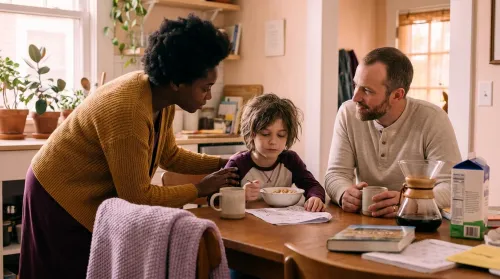
My nine-year-old asked me last Sunday whether his great-grandfather in Cork would have made stuffing the way I do, and what he was really asking is the same question quietly running through most households right now: which family traditions are still ours, and which ones have we already replaced without noticing? The honest answer for him was no — my grandfather would have made it the way my grandmother told him to and would have stayed mostly out of the kitchen otherwise — but the question itself was worth more than the answer. The boy was trying to place himself in a line. He had seen me watching a TikTok of an American woman folding sage into a Thanksgiving bread that I had never eaten in my life until I moved to Melbourne, and he wanted to know how a thing becomes ours.
Family traditions are doing something strange and instructive in 2026. They are being torn up by one set of forces and rewritten by another. The data on the decline is real. So is the rebuilding. This piece is about what each looks like, and what a parent can actually do with that information tonight.
The Data on the Decline
The single most striking number on family rituals in North America is this one: only 38% of Gen Z ate meals together as a family daily growing up, compared with 76% of baby boomers (Survey Center on American Life). A near-halving across three generations. In Britain the parallel figures are 45% of households eating together less than they did a decade ago and an average UK cooking time, in 2025, of 31 minutes — a record low (GB News).
Faith-anchored rituals have moved in the same direction. 34% of Gen Z are religiously unaffiliated, only 21% read scripture weekly with family growing up, and only 40% said grace at meals weekly (Survey Center on American Life). The script my own father grew up with — Mass on Sunday, a roast after, grace at the table — is gone in most households of the cohort now becoming parents. That is not a moral verdict, it is the input data.
I find this more instructive than depressing. It tells us that the inherited form of "family tradition" was held in place by structural defaults — a single-earner household, a Sunday observance, a slow weeknight kitchen — that most households simply don't have any more. What is filling the gap is the more interesting question, and the answer is not nothing.
Gen Z Is Selectively Reviving Tradition
The lazy take is that Gen Z is killing family traditions. The actual data is a selective revival. 35% of Gen Z share dreams of getting married and 34% hope to have children. Sourdough baking, herb gardening, home cooking, mocktail nights, and craft nights are surfacing as recognisably Gen-Z-coded "trad" rituals on social platforms (Liberty Champion, Feb 2025). In the UK, Christian self-identification among 18-24 year-olds rose from 4% in 2018 to 16% in 2024 — a fragmented, surprising re-engagement, not a return to mass observance (GB News).
These are not the same traditions their parents kept. They are not Sunday Mass; they are sourdough night. They are not grace at the table; they are a candle and a phone face-down and a deliberate twenty minutes without scrolling. The form has changed. The intent — gather, pause, mark the time as different — has not.
TikTok-to-Table: How Heritage Cooking Travels Now
Most parenting blogs that win on this topic treat TikTok as a threat to family rituals. The data says it is functioning as a transmission channel for them. Quid's analysis of Thanksgiving 2025 social mentions logged 168,400 mentions and 63 billion potential impressions, with content on passed-down recipes, cultural rituals, and family traditions generating the highest positive sentiment of any category — making mozzarella with Nana, Polish dishes, immigrant-heritage cooking. 72% of the audience was female, dominant cohort 25-44 (Quid).
A few concrete examples of TikTok-to-table flows worth knowing about, because the original version of this article promised them and never named one:
- Thanksgiving tacos and stuffing sliders. Trending mash-ups in 2024-2025 that took a single feast meal and broke it into a week of leftovers that the household could actually finish.
- Sourdough as weekly ritual. The 2020-pandemic starter that did not die — it became the slow Saturday-morning thing the kids learn to fold before they can read a recipe.
- Mocktail nights. A Gen-Z-coded ritual that lets the household mark Friday evening without the bottle of wine the previous generation defaulted to.
- "What I eat in a day" → family menu planning. Teenagers using their own feed as the input layer for what the household cooks the following week, with the parent doing the shopping list.
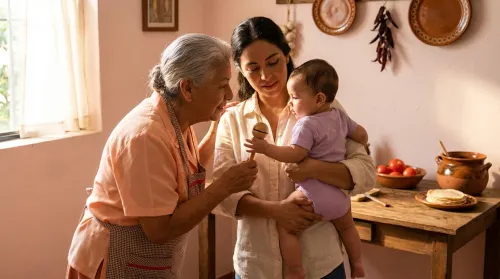
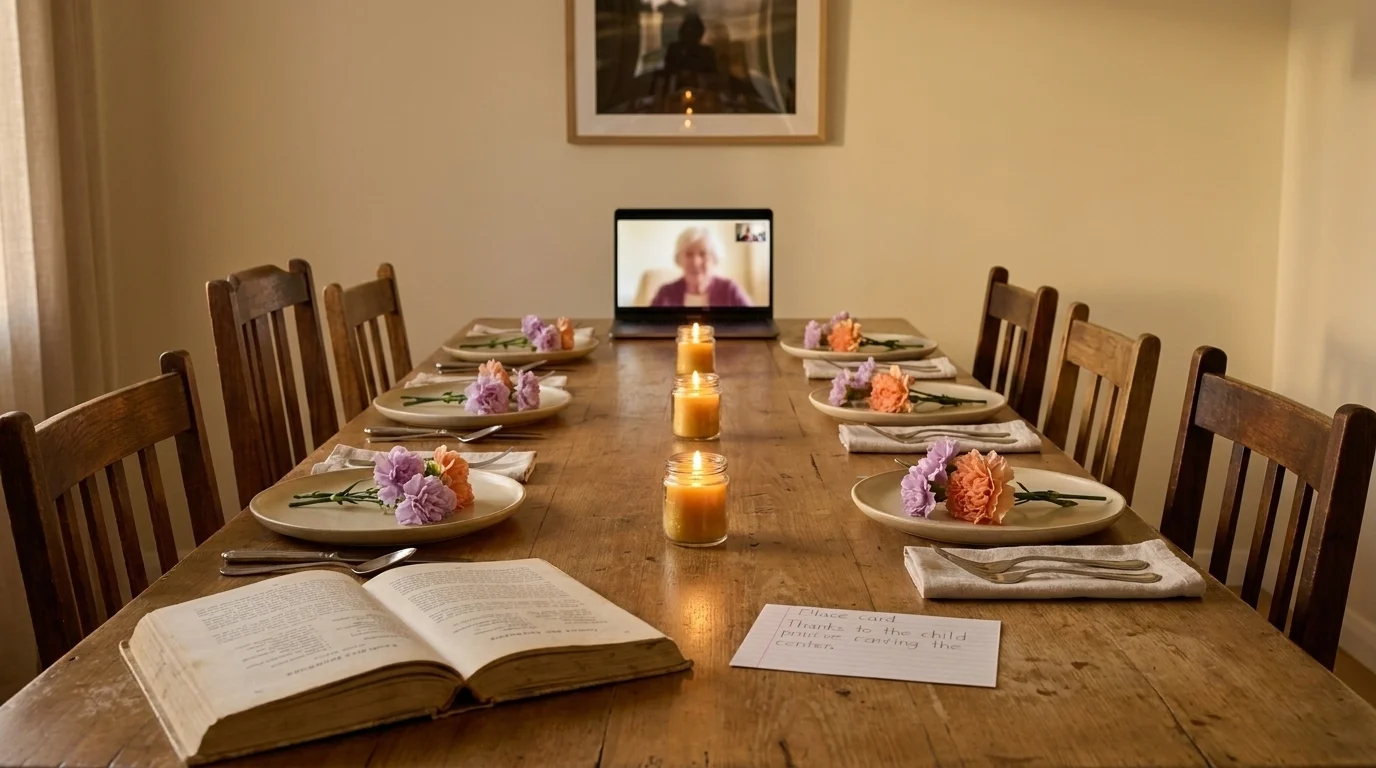
- FaceTime-grandma cooking sessions. A grandparent abroad walks a grandchild through a recipe over video. The kid does the chopping; the grandparent does the watching. This is what "heritage transmission" looks like in 2026.
What links these is not the platform. It is that the youth-culture flow is going into the household, not out of it. The teenager is bringing the new thing home, and the new thing is — surprisingly — a slow, embodied, kitchen-anchored ritual.
Reverse Mentoring at the Kitchen Table
The workplace research on Gen Z is clear: 83% of Gen Z professionals say a mentor is crucial to their career, and 80% prioritise mentorship over salary (DAVRON). Companies have responded by building formal reverse-mentoring programmes that pair Gen Z employees with senior leaders, where the younger person teaches platform and AI fluency in exchange for institutional knowledge.
Reverse mentoring works at the kitchen table too, and the surveys are starting to catch up. 68% of Gen Z parents already learn parenting skills online (Chicco, via The Drum). The transmission is two-way. A few household-level versions worth naming:
- The teenager runs the family Spotify playlist for the holiday gathering.
- The eleven-year-old curates the shared photo album the grandparents subscribe to.
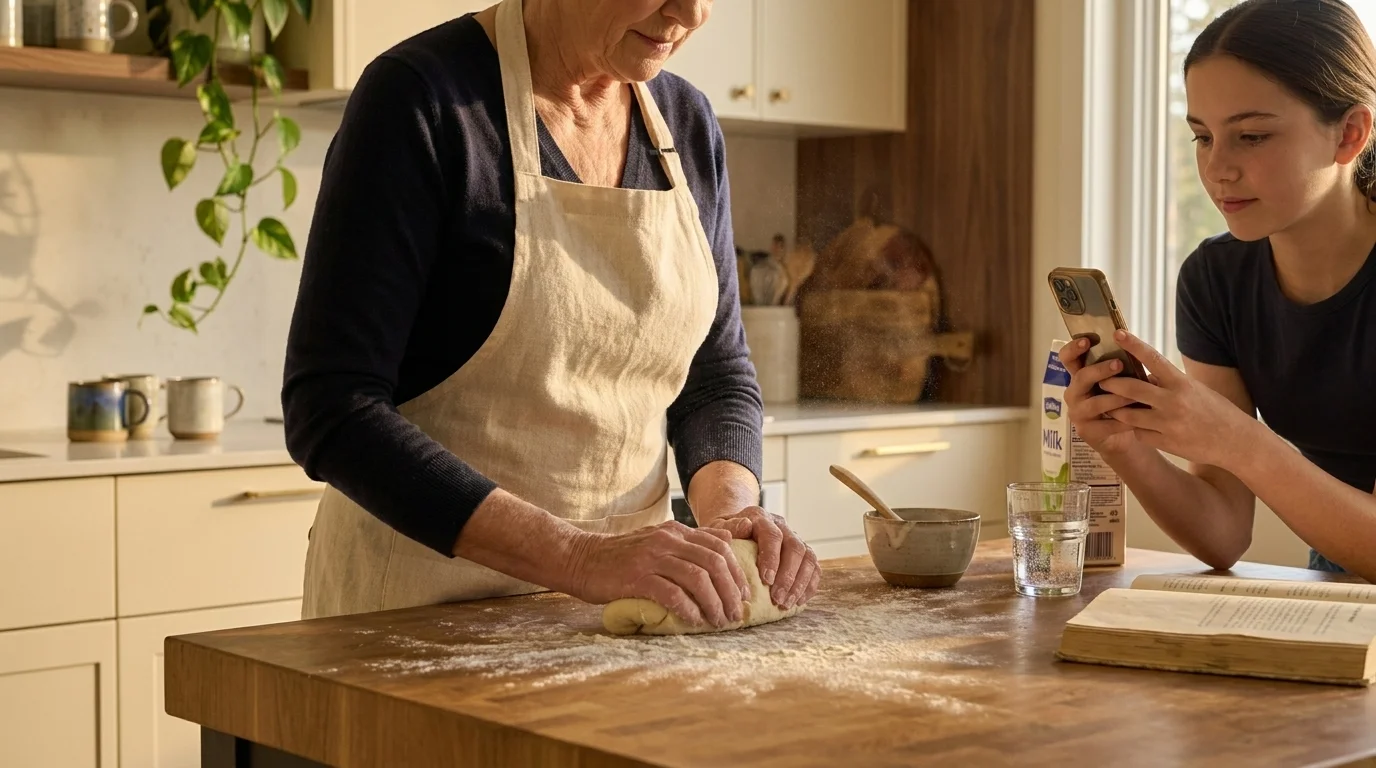
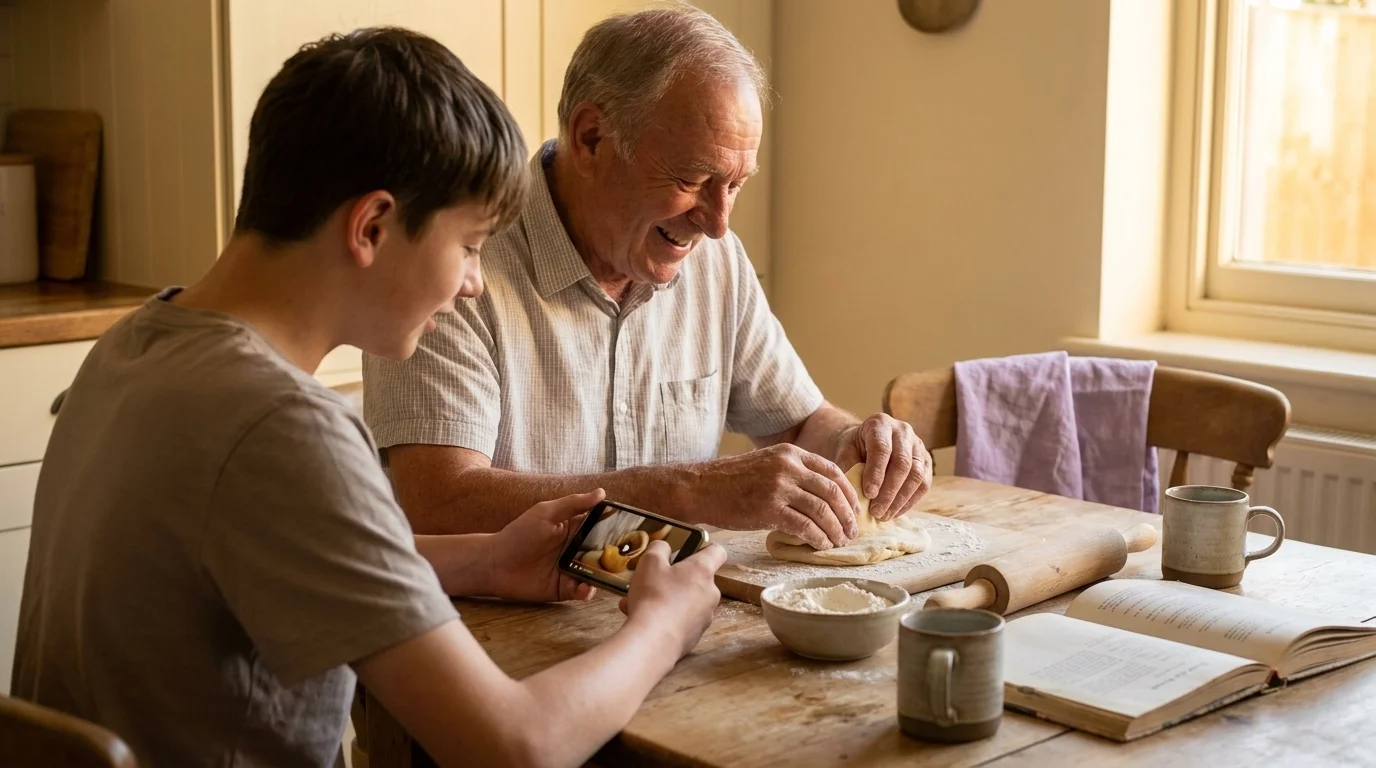
- The grandparent shares the recipe; the grandchild films the technique on a phone propped against a flour canister.
- The mother shows the daughter how she was taught to fold a dumpling; the daughter shows the mother how to record it so the niece in Sydney can watch.
I think of this as the handover, except it goes both ways. The older generation hands down what the kitchen remembers. The younger generation hands up what the phone can do. Neither piece is sufficient on its own. The Swedish parental-leave example I keep coming back to says the same thing about gender division of labour — policy is necessary and not sufficient, and what changes the culture inside the kitchen is what the children are actually watching. The same applies to family rituals: state-of-the-art platforms are necessary and not sufficient. What the children are watching is whether the adults around them think the ritual is worth time.
Modernize Five, Retire One: A Working Framework
The Chicco 2024-2025 survey of more than 1,500 Gen Z adults found that 54% plan to keep core parental values while modernising other aspects of how they parent, and only 11% intend to follow their own parents' approach closely (Chicco). Translated into a household decision: most Gen Z parents are not throwing out family traditions, and they are not keeping them unchanged either. They are running a selective edit.
Here is a working version of the edit, for any household — Gen Z or otherwise — that wants a recipe rather than a vibe.
Keep the core.
- A weekly gathered meal, even if the menu is takeaway. The form matters more than the content.
- A named holiday ritual that belongs to your household, not the calendar's idea of one (we do an Irish-Australian leftovers night the day after Christmas — it has survived three moves and two cities).
- One thing the elders in the household know how to do that the children are being shown how to do too. A recipe, a prayer if your house has one, a song, a stitch. One transmission a year is enough.
Modernise the delivery.
- A pre-meal group-text gratitude thread instead of grace at the table, if grace at the table is gone.
- A shared photo album the household curates together. Not a parent's Instagram of the kids; a real shared album the kids can edit and the grandparents subscribe to.
- A family Spotify playlist for the holiday, contributed to by everyone old enough to type.
- A "tech as the ritual" night: one specifically chosen video the household watches together. Not background screens — a chosen thing.
- A FaceTime cooking session with the relative who has the recipe nobody else has.
Retire what is broken.
- Forced participation. Anyone old enough to refuse should be old enough to be asked. (Children should have to come to the table; they should not have to perform delight.)
- Single-day-only observance. If your household can only do the holiday once a year and the day itself is hostile to it, do it twice instead. Christmas does not require a fight.
- Screen-time absolutism that punishes the very platforms heritage cooking now travels on. The rule "no phones at the table" has a better cousin: "one phone, on the table, for the recipe or the call to Granny".
This framework borrows nothing more than the Chicco "keep core, modernise the rest" finding. The numbered, named delivery is the part that turns a vibe into a Sunday.
60 Family Traditions Examples by Type
A reader looking for family traditions examples — which is what the 1,300-monthly-searches version of this query is asking for — wants a list, not a meditation. Here is a working list across categories, with a 2026 youth-culture annotation where it applies.
Weekly traditions
- Sunday gathered meal, takeaway counts.
- Friday mocktail night (Gen-Z-coded; works at any age).
- Saturday-morning slow breakfast (sourdough optional).
- One scheduled chore done together rather than divided.
- A weekly walk on a fixed route, named (we call ours "the long bit").
Monthly traditions
- A board-game night with a rotating chooser.
- A scheduled FaceTime call to the relative furthest away.
- A "phone-down dinner" — once a month is realistic; once a week is a lecture.
- A shared photo-album review of the month, all phones on the table.
- A small household budget for one shared experience (a film, a cheap meal out, a museum's free day).
Seasonal traditions
- Equinox / solstice marker if your household isn't religious — a meal, a candle, a walk.
- First snow / first proper rain ritual.
- A specific spring-cleaning weekend with one job per child.
- A summer-evening porch or balcony ritual.
- A back-to-school photo, indoors not on a lawn, no caption.
Holiday traditions
- A "leftovers day" the day after the main holiday.
- A specific film or album played only at this time of year.
- A shared playlist contributed to by everyone old enough to type.
- A grandparent-led recipe filmed by a grandchild.
- A handwritten card from every household member to one other, drawn by lot.
Heritage-and-handover traditions
- One language phrase taught per month from the household's heritage.
- A named recipe handed down each year, with a photograph of the previous attempt.
- A walk through a meaningful neighbourhood — for me, when we are home, that's North King Street in Dublin and the Inner City Organisations Network door my father used to knock on.
- A storytelling round at one meal per year (one true family story per person).
- A small object passed annually to the next person to "hold" — a book, a recipe card, a charm.
Birthday traditions
- The chosen meal, no overrules.
- A morning letter from a parent or grandparent — sealed and read alone.
- A "year in review" the night before, four sentences each.
- A photo at the same spot every year.
- The first phone call of the day, scheduled and reciprocated.
Five categories, twelve traditions each, sixty total. None of them require new technology; most of them are improved by it.
By the Numbers
- 38% / 76% — share of Gen Z vs baby boomers who ate family meals together daily growing up (Survey Center on American Life).
- 45% — UK households eating together less than a decade ago (GB News).
- 31 minutes — 2025 UK record-low average cooking time per meal (GB News).
- 54% — Gen Z parents planning to keep core values and modernise the rest (Chicco).
- 68% — Gen Z parents who learn parenting skills online (Chicco / The Drum).
- 168,400 mentions / 63B impressions — TikTok Thanksgiving 2025 family-tradition content reach, +70% net sentiment, highest of any category (Quid).
- 4% → 16% — UK 18-24 Christian self-identification, 2018-2024 (GB News).
- 83% / 80% — Gen Z professionals who say mentorship is crucial / prioritise it over salary (DAVRON).
A Closing Note on the Boy's Question
I told my nine-year-old that his great-grandfather would not have made the stuffing the way I do, and that he would have been pleased to learn that his great-grandson was asking. He thought about that for the length of one Melbourne block and then asked whether we could do the stuffing on the boxing-day leftovers night this year and call it ours. Yes, mate, we can. That is more or less how it works. The data says the rituals are different; the data says the rituals are surviving. What the children are watching is whether the adults around them think the things are worth keeping. They mostly are.
Frequently Asked Questions
Per the May 2025 Chicco survey of 1,500+ Gen Z adults, 54% plan to keep core parental values while modernising the rest, and only 11% intend to follow their parents' approach closely. Weekly gathered meals, holiday gatherings, and heritage recipes are being kept; rigid single-day-only observance, forced participation, and screen-time absolutism are being modernised or retired.
Both, but the transmission story is bigger than the distraction story. Quid's analysis of Thanksgiving 2025 logged 168,400 mentions and 63 billion potential impressions, with passed-down-recipe and heritage-cooking content generating the highest positive sentiment of any category. Families increasingly use the platform to source new rituals (Thanksgiving tacos, mocktail nights) and document old ones (grandparent recipes filmed by grandchildren).
Apply reverse mentoring at the kitchen table. Pair the older generation's heritage knowledge with the younger generation's platform fluency: the teen runs the holiday Spotify playlist, the child curates the shared photo album, the grandparent shares the recipe while the grandchild films the technique. The workplace data backs the principle — 83% of Gen Z professionals say mentorship is crucial — and the household version works the same way.
They have declined sharply across generations. Only 38% of Gen Z ate family meals together daily growing up, compared with 76% of baby boomers (Survey Center on American Life). In the UK, 45% of households eat together less than a decade ago and average cooking time hit a record low of 31 minutes in 2025 (GB News). But Gen Z reports an intentional pull back toward meaningful family time, and 70% plan to offer more emotional support than they received (Chicco).
Five easy starters: a Sunday gathered meal (takeaway counts), a Friday mocktail night, a phone-down monthly dinner with all devices on the table, a shared photo album the whole household contributes to, and a FaceTime cooking session with the relative who has the recipe nobody else has. Pick one, do it twice, and decide whether it lives. That is how a tradition starts.
The data shows a selective revival, not a wholesale return. 35% of Gen Z want to get married, 34% want children, and Gen-Z-coded 'trad' rituals (sourdough, herb gardening, home cooking, mocktail nights, craft nights) are surfacing on social platforms (Liberty Champion, 2025). In the UK, Christian self-identification among 18-24 year-olds rose from 4% in 2018 to 16% in 2024 (GB News). The form has changed; the intent — gather, pause, mark the time as different — has not.