
Children's Activities For Spring


By late March, the question I hear most from parents is a version of the same one: the weather has finally turned, everyone is restless, so what should we actually do? This guide answers it with more than 30 children's activities for spring — real spring activities for kids you can start this afternoon — and it adds the one thing most lists skip: the developmental reason each idea earns its place. Every activity below is tagged by age (toddler, preschool, school-age) and grouped by type — outdoor, crafts, sensory, and rainy-day — and each carries a short, sourced note on what it is quietly building: fine-motor control, gross-motor movement, sensory regulation, or the kind of unstructured play pediatricians now write into well-child visits. Nothing here needs a craft store or a Pinterest budget; most of it uses what you already have. And because spring is a season, not a single Saturday, there is a free printable checklist at the end to carry the momentum from the first warm day through the last.
Outdoor & Active Spring Activities
Start here, because outdoor play is where the strongest numbers live. The CDC's physical-activity guidelines call for children ages 6–17 to get at least 60 minutes of movement a day, and for children ages 3–5 to be active throughout the day — targets that are far easier to hit in April than in January. There is a second, less obvious reason to get outside: a 2024 meta-analysis of the myopia literature found that more time outdoors is associated with lower odds of nearsightedness in children — on the order of a couple of percent per additional weekly hour — with the working recommendation landing near two hours a day. That is an association, not a verdict: it tells us outdoor time and clearer distance vision travel together; it does not prove the sunlight is doing the work. And a 2025 study of 622 young people on outdoor adventure programs reported self-rated well-being up 23% and resilience up 36% after activities like tree-climbing and den-building. Read that as a measured before-and-after in one sample, not a guarantee — but it points the same direction every other line of evidence does.
One caution before the list. Spring sun is stronger than it feels, so hats and sunscreen belong in the routine once you are aiming for that two-hour mark; water and mud play need an adult within arm's reach; and small natural objects — seeds, pebbles, petals — are a choking and allergy risk for the youngest children, who explore with their mouths. Match every idea to your own child's stage. A list can tell you what tends to suit a two-year-old; only you can tell whether it suits yours.
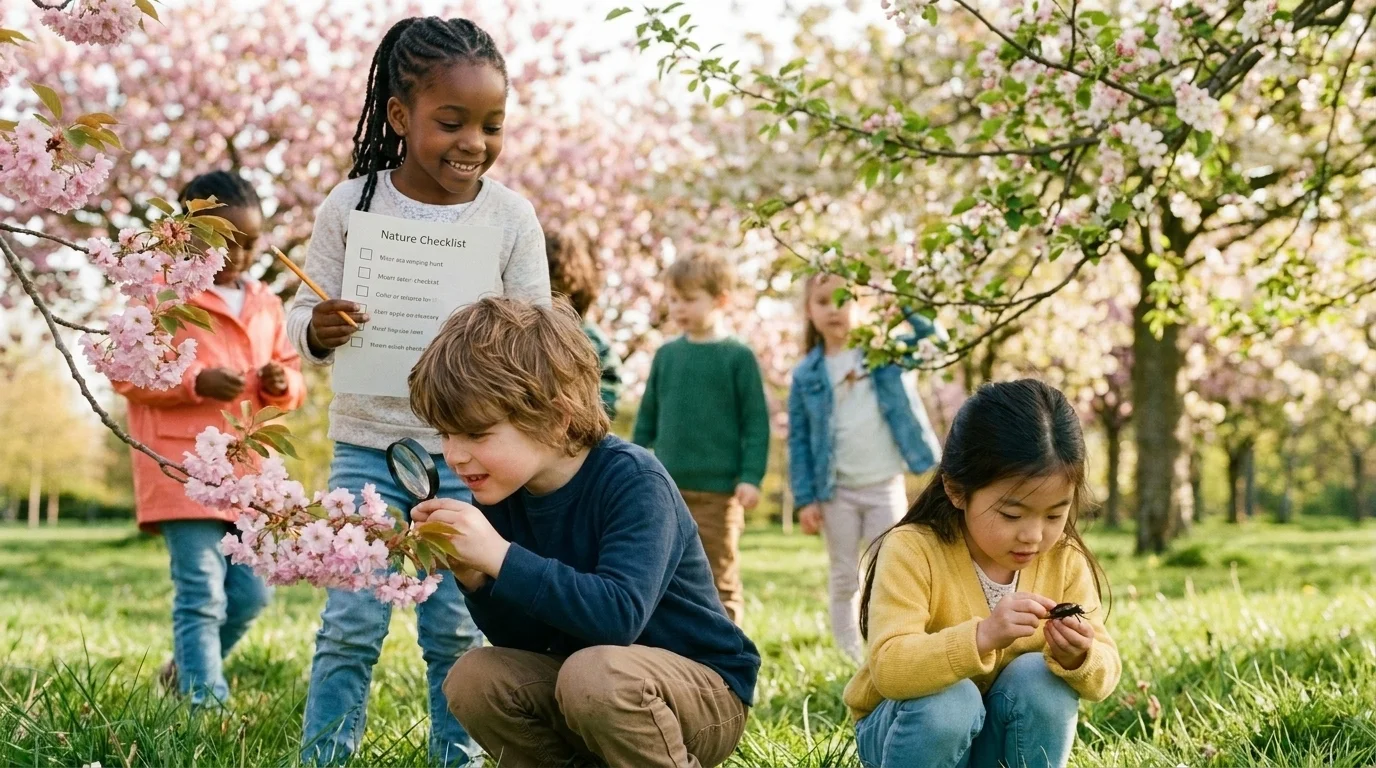
1. Nature walk — Amble around the block or a local trail and name what has changed since winter. Gentle gross-motor movement that counts toward the CDC's daily target, plus outdoor light for those developing eyes. Ages: all.
2. Plant a seed or a mini-garden — Sunflower or bean seeds in a patch of soil or a pot. Digging, scooping, and pressing build hand strength; the daily "did it sprout yet?" check gives a young child something slow to watch and come back to. Ages: 2+.
3. Fly a kite — An open field and a breezy afternoon. Running out a kite is whole-body gross-motor work, and keeping it up there means eyes and hands working together. Ages: 4+.
4. Puddle-splashing — Boots, a rain jacket, and permission. The sensory jackpot of spring, and pure active minutes toward the daily goal. Ages: all.
5. Outdoor scavenger hunt — A short list — something yellow, a smooth stone, a bird — sends kids looking closely at the world. Observation, sorting, and a lot of walking. Ages: 3+.
6. Bug and bird hunt — A magnifying glass and a little patience. Close looking and quiet focus, the outdoor cousin of attention practice. Ages: 3+.
7. Sidewalk-chalk obstacle course — Hopscotch squares, spirals, and "jump here" arrows down the driveway. Balance, coordination, and movement the child designs. Ages: 3+.
8. Bike or scooter ride — Balance, leg strength, and a genuine dose of the day's active minutes. Helmets on. Ages: 3+.
9. Family picnic — Move a regular meal outdoors. Low effort, high return: fresh air, unstructured time, and the relaxed connection the play research keeps pointing to. Ages: all.
For ideas that work in any season, see more do-anywhere family ideas.
Spring Crafts for Kids
Crafts get dismissed as the filler between "real" activities, which badly underrates them. The small, fiddly movements a craft demands — cutting with child scissors, threading, tearing paper, pinching a bead — are the same fine-motor actions occupational therapists tie to handwriting and reading readiness. The payoff is not the finished butterfly on the fridge; it is the pincer grip and hand strength the child built making it. Keep the materials basic and the mess forgivable.
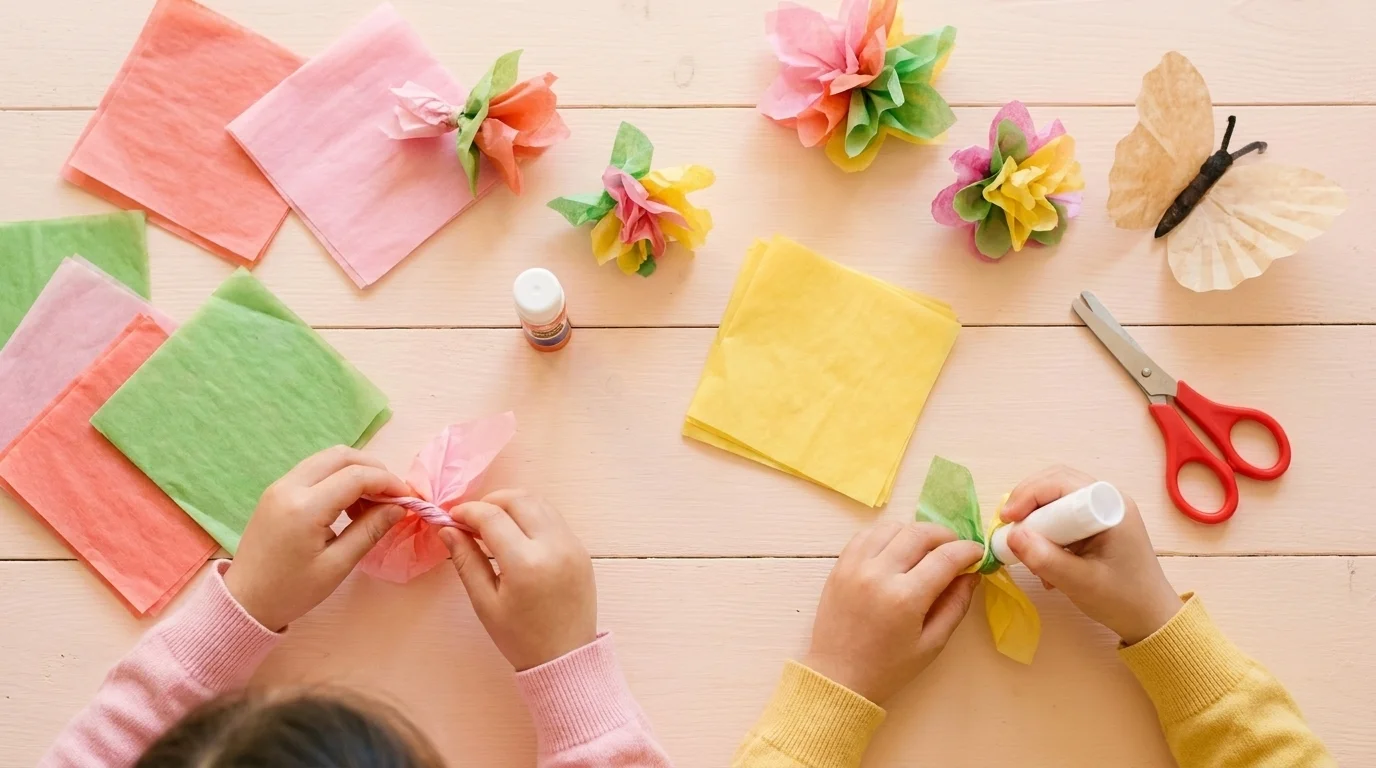
10. Tissue-paper flowers — Scrunching and twisting squares of tissue into blooms. Pincer-grip and finger-strength practice in disguise. Ages: 3+.
11. Coffee-filter butterflies — Color a filter with washable markers, spritz with water, watch the colors bleed, then cinch the middle. Fine motor plus a small color-mixing lesson. Ages: 3+.
12. Handprint art — Paint a palm, press, turn the print into a chick or a flower. For toddlers it is sensory; for older kids it is a keepsake. Ages: 1+.
13. Rainbow crafts — Torn-paper rainbows, cotton-ball clouds, or a paper-plate arc. Sorting by color adds a little early categorizing to the fine-motor work. Ages: 2+.
14. Egg-carton caterpillar — Cut a carton into a strip, paint it, add pipe-cleaner antennae. Cutting and painting, and a tidy lesson in turning "trash" into something. Ages: 4+.
15. Seed or petal collage — Glue dried seeds, petals, and leaves into a picture. Placing small pieces is precise finger work, and the materials are free from the backyard. Ages: 3+.
16. Nature suncatchers — Press petals and leaves between contact paper and hang them in a window. Careful placement plus a first look at light and translucency. Ages: 3+.
17. Salt-dough bird's nest — Shape dough into a nest and roll little eggs. Squeezing and rolling is heavy hand-strength work — the muscles behind a steady pencil grip. Ages: 3+.
Sensory & Nature Play
Sensory play — hands in soil, water, sand, or petals — looks like mess for its own sake, but it does quieter work. The American Academy of Pediatrics notes that in one study, anxious three- and four-year-olds were about twice as likely to feel less stressed after just 15 minutes of play. In the decade I spent running developmental evaluations, my strong impression — and it is an impression, not data — was that the children who could reliably settle themselves were rarely the ones with the most enrichment; they were the ones with the most unhurried, hands-on, low-stakes play. The National Wildlife Federation makes a related point about green time — children with more of it tend to show better focus and lower stress. Here again, that is a pattern the research finds, not a switch you flip.
18. Spring sensory bin — A tub of dried beans or shredded paper with scoops, cups, and hidden "flowers." Pouring and digging is self-directed sensory regulation. Ages: 2+ (supervise mouthing).
19. Mud and water play — A patch of dirt, a hose, and some old cups. The most maligned and most valuable spring activity there is. Ages: all.
20. Windowsill seed-growing in a jar — A bean pressed against the glass of a clear jar so roots and shoot stay visible. Sensory, plus a front-row seat to how growth actually works. Ages: 3+.
21. Texture nature hunt — Collect something rough, something smooth, something soft, and something prickly. Naming textures builds sensory vocabulary and close attention. Ages: 2+.
22. Flower-petal play — A bowl of petals to sort, stir into "soup," or press flat. Fragrant, calming, and free in April. Ages: 2+ (supervise mouthing).
23. Rain-cloud in a jar — A shaving-foam "cloud" floated on water, dripped through with colored water until it "rains." A calm, mesmerizing intro to where rain comes from. Ages: 4+.
Indoor & Rainy-Day Spring Activities
Spring in most of the country means rain, and a washout does not have to mean a screen marathon. Development does not pause for weather; it just moves indoors.
24. Spring story-time booklist — A stack of season-themed picture books and a blanket fort. Few things do more for early language than being read to, in my view — and a fort makes it irresistible. Ages: all.
25. Freeze-dance movement break — Music on, dance, freeze when it stops. Gross-motor energy, plus the small discipline of stopping on cue. Ages: 2+.
26. Weather-tracking chart — A homemade calendar where kids draw each day's weather. Observation, routine, and an early feel for data. Ages: 4+.
27. Grow-a-rainbow paper-towel experiment — Marker dots on a folded paper towel, both ends dipped in water, colors climbing to meet in the middle. Ten minutes of visible science. Ages: 4+.
28. Indoor "hunt the card" game — Hide the printable scavenger cards (below) around the house. Movement and reading practice on a rainy day. Ages: 3+.
29. Pom-pom or button spring tree — Glue small pieces as "blossoms" onto a drawn branch. Repetitive pincer-grip work — fine motor again, dressed up as art. Ages: 3+ (supervise small parts).
Spring Activities by Age — Toddler, Preschool & School-Age
The same activity lands differently at two, at four, and at seven. The rule of thumb: simple and sensory for toddlers, hands-on and creative for preschoolers, open-ended projects for school-age kids. Here is how to match the list above to the stage in front of you.
Toddlers (1–3)
Keep it short, sensory, and closely supervised. From the list above, toddlers do best with #4 (puddle-splashing), #12 (handprint art), #18 (a sensory bin), and #19 (mud and water play) — with a careful eye on anything small enough to reach a mouth. One toddler-specific favorite:
30. Spring color sorting — Silk flowers or pom-poms sorted by color into a muffin tin. Builds the pincer grip and early color-matching, and toddlers will repeat it happily. Skill: fine motor + categorization.
Preschoolers (3–5)
This is the sweet spot for crafts and planting. Preschoolers thrive on #2 (planting seeds), #10 and #11 (tissue flowers and coffee-filter butterflies), and #5 (a picture-based scavenger hunt). One to add:
31. Grow-your-name grass heads — Grass or cress seed on damp cotton in a cup, shaped into a face or a first initial. Daily watering builds responsibility; watching it sprout builds cause-and-effect. Skill: sequencing + patience.
School-Age (5–9)
Older kids want a challenge and some ownership. Point them at #6 (identifying bugs and birds), #7 (designing their own chalk course), and #26 (running the weather chart). One project-sized idea:
32. A backyard nature journal — A cheap notebook for sketching, pressing, and dating what they find across the season. Observation, writing practice, and a record they will want to keep adding to. Skill: sustained attention + early science writing.
The Developmental "Why" Behind Spring Play
If there is a single reason to take all of this seriously, it is the American Academy of Pediatrics' 2018 clinical report The Power of Play (Yogman and colleagues, published in Pediatrics) — the document that put a "prescription for play" into pediatric well-visits. Its plain-language summary is worth quoting: play can improve children's abilities to plan, organize, get along with others, and regulate emotions, and it helps buffer them against toxic stress. Free play, the AAP adds, helps develop motor skills, prevent childhood obesity, and build emotional intelligence. Notice what that list is: motor, sensory, social-emotional — the exact skills the "why" tags in this guide keep naming. The backdrop is that children in many parts of the world spend less time outdoors than ever, by UNICEF's account, which is precisely why a spring nudge outside matters. Spring does not add a new kind of development; it opens a wider, greener, better-lit window to do the ordinary work of it. For more on the machinery underneath, see how young children's thinking develops.
Free Printable Spring Activity Checklist
To keep the season from slipping past in a blur of good intentions, this guide comes with a one-page spring activity checklist — a bucket list you can print, stick on the fridge, and tick off from the first warm day to the last. It bundles the best of every section above: a few outdoor musts, a craft or two, a sensory afternoon, and a rainy-day backup, with blank squares to add your own. Treat it as a gentle family challenge rather than a to-do list — the goal is momentum, not a perfect score. Print it, let each child pick the next square, and let spring do the rest.
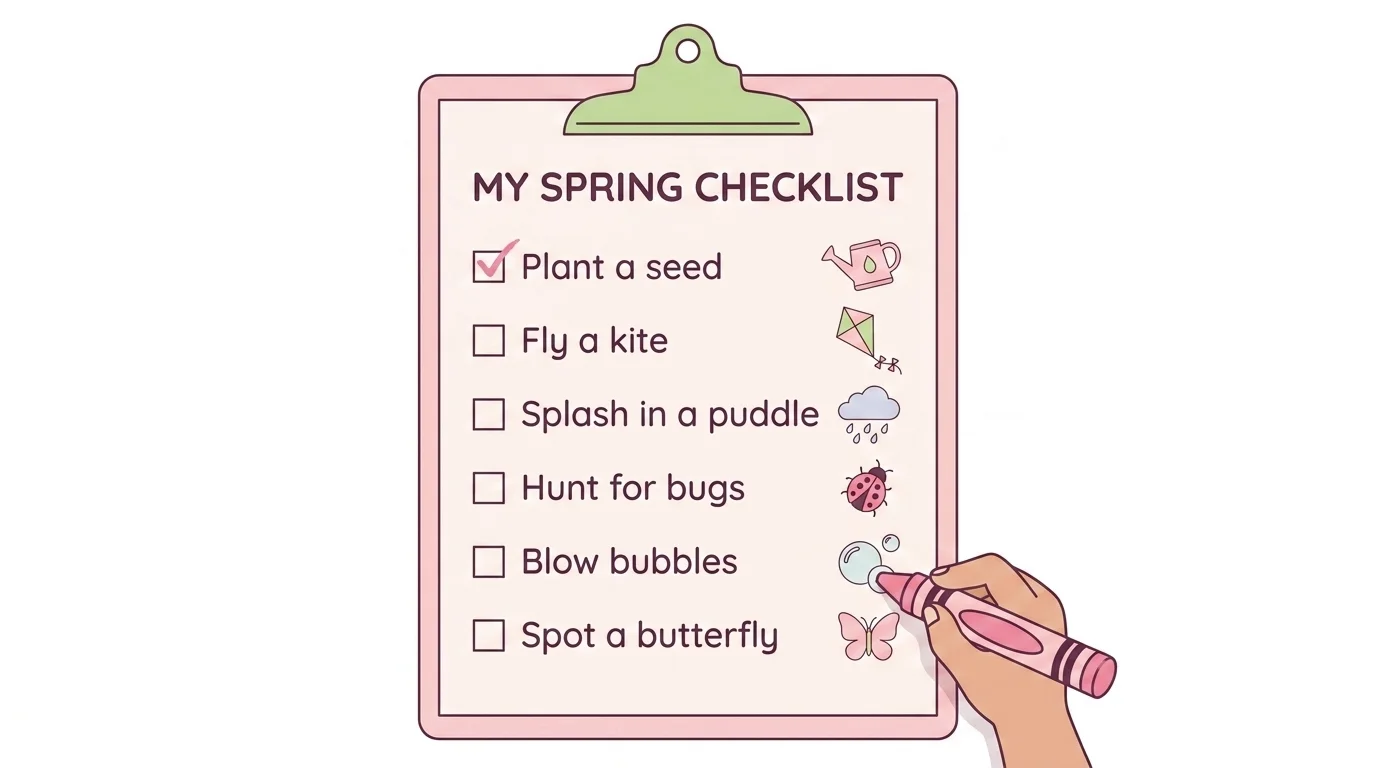
It pairs naturally with the rest of our children's wellness library.
The best children's activities for spring are not the ones with the most supplies or the cleverest angle — they are the ordinary ones done often: the muddy hands, the cut-paper flower, the scavenger hunt that ends in a scraped knee and a good story. Each is quietly building the motor skills, focus, and resilience the developmental research keeps circling back to. You do not need all 32 ideas. Pick a few across the ages and types, print the checklist, and get outside while the weather turns. The evidence points one way; the judgment about what suits your own child is, as always, yours to make. Explore more in our children's wellness section — then go make a mess.
Frequently Asked Questions
Nature walks, planting seeds, kite-flying, puddle-splashing, spring crafts (flowers, butterflies, rainbows), sensory bins, and outdoor scavenger hunts — each supporting motor, sensory, or social development.
Simple, low-prep, hands-on play — scooping soil to plant seeds, water and mud sensory play, handprint crafts, and short nature walks — which build fine motor skills and curiosity. Supervise anything small enough to mouth.
The CDC recommends kids ages 6–17 get at least 60 minutes of activity daily and ages 3–5 stay active throughout the day; about 2 hours outdoors is also linked with healthier eyesight.
The AAP's 2018 'Power of Play' report links active, sensory, and outdoor play to stronger motor skills, self-regulation, and social-emotional resilience, and to buffering everyday stress.
Spring crafts (paper flowers, butterfly art), sensory bins, seed-growing on a windowsill, and a printable spring scavenger hunt keep development going indoors when the weather turns.