
Decoding the Myth of the Natural Maternal Instinct: Insights and Realities


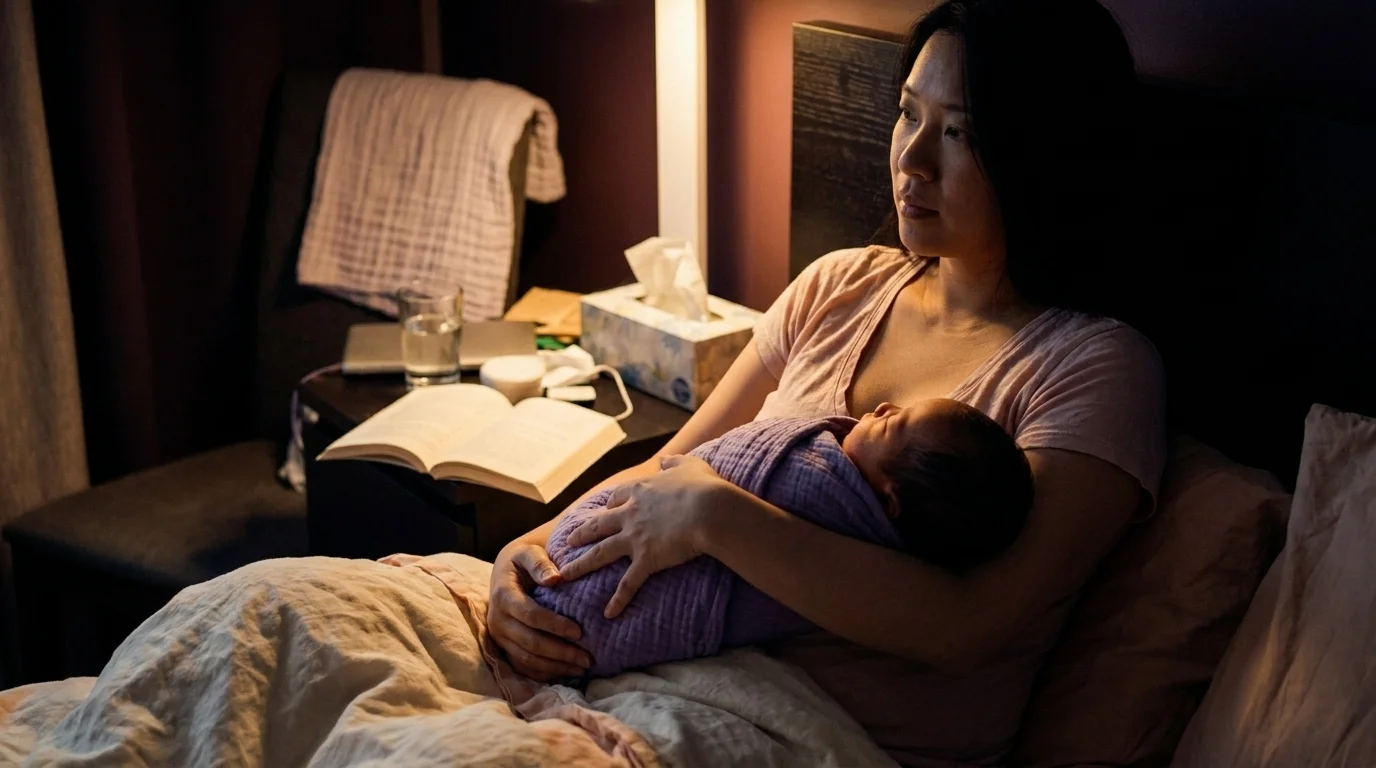
The baby is asleep on my chest at four in the morning, and I am trying to decide whether the thing I am feeling — this calm, exhausted, narrow attention to the rise and fall of his ribs — is what people mean when they say maternal instinct. The phrase has the shape of an answer; what it actually is, the longer I look at it, is a question. The cultural meaning of maternal instinct — the inherited assumption that a woman who has just had a baby will know, by some pre-installed program, how to care for him — is one of the more persistent ideas about motherhood, and one of the ones the recent scientific literature has done the most to revise. Chelsea Conaboy, in Mother Brain, puts the revision plainly: "the story that exists in the science today is far more meaningful than the idea that mothers spring into being by instinct" (Conaboy, Macmillan, 2022). The reason it is more meaningful is that what actually happens — the remodelling of a brain, the rearrangement of an attention — is stranger and more particular than any old story about instinct allowed us to imagine.
Is maternal instinct real?
It depends what we mean by real. If we mean that pregnancy and the early postpartum produce measurable, replicable changes in the brain of the gestational parent, the answer is unambiguously yes. The 2025 study by Susanna Servin-Barthet, Magdalena Martínez-García, María Paternina-Die and colleagues, published in Nature Communications, followed 127 gestational mothers, thirty-two never-pregnant women, and twenty non-gestational mothers across pregnancy and postpartum. Grey-matter volume in the default-mode and frontoparietal networks fell by 2.7 percent in the second trimester, fell again by 4.9 percent immediately before delivery, and then recovered by 3.4 percent within six months postpartum — a U-shaped trajectory driven principally by the hormones estriol sulfate and estrone sulfate, and not by parenting experience as such (News-Medical, 2025). That is a real change. It is not the same change as "downloading caregiving knowledge."
If by real we mean something closer to the cultural meaning — an automatic, knowing competence that arrives with the baby and dispenses with the need to be taught anything — the answer is no. The same body of research that confirms the brain changes also disconfirms the older story. Natalia Chechko and Anna Nehls' 2025 review in Neuroscience Insights gathers the current literature under the heading "The Dynamic Reorganization of the Maternal Brain" and argues that what we have been calling maternal instinct is better understood as a re-tuning of caregiving circuitry — a circuitry that exists in most adult brains and that becomes more sensitive, more responsive, and more efficient when activated by the proximity and care of an infant (Chechko & Nehls, Neuroscience Insights, 2025). The circuitry is general. The activation is specific.
This distinction matters because the cultural script does damage when it goes unexamined. A mother who arrives at the first week of her baby's life expecting to know what she is doing — because the script promised her she would — and who finds that she does not, is forced to interpret the absence of knowing as a defect in herself. She is reading the wrong instrument. She is measuring her own first week against a yardstick built from a story rather than from the actual biological process her body is in the middle of.
What the maternal brain is actually doing
The honest summary of the recent literature, in the most accessible language I can find, is this. The grey-matter U-curve found by Servin-Barthet's group is not a loss in any colloquial sense — what is happening is a pruning. Old synapses are being cleared away to make the relevant regions more efficient at the tasks pregnancy and early motherhood will require: heightened sensitivity to infant cues, faster and more accurate emotion-recognition in faces, greater tolerance for interrupted sleep, an organised vigilance that does not collapse under load. The 3.4 percent recovery in the six months after delivery is not the brain "going back to normal." It is the brain settling into a new configuration. Servin-Barthet's team also reports that maternal well-being mediated over half of the relationship between grey-matter recovery and maternal attachment — meaning that the brain changes happen, but how they translate into the felt experience of being-a-mother depends substantially on how the mother is otherwise doing (News-Medical, 2025). This is the empirical version of a thing every mother already knows in her body: that the early weeks go better when she has slept, when she is not alone in the house, when somebody else has cooked dinner.
The earlier landmark in this literature, frequently cited and worth naming, is Elseline Hoekzema's 2017 paper in Nature Neuroscience, which first demonstrated that pregnancy-related grey-matter changes were robust enough that researchers could correctly sort post-scan images of women who had been pregnant from those who had not. The 2025 work refines that finding with a hormone-mediated mechanism and a recovery curve. The arc, taken as a whole, is from "something happens to the brain in pregnancy" to "a specific, hormonally-driven remodelling happens, in a specific timeline, with a specific functional purpose." There is no longer a serious scientific reading in which nothing biological occurs. There is also no serious scientific reading in which what occurs is "instinct" in the older, downloadable sense.
Related Article: Embracing Imperfection: The Art of Realistic Parenting
Can fathers, adoptive parents, and non-mothers have it?
Yes. This is the part of the literature that has matured fastest in the last two years, and it is the part that should most thoroughly retire the gendered version of the older story.
A 2026 longitudinal study published in Translational Psychiatry followed twenty-five fathers across the first six months postpartum and documented grey-matter reductions in the bilateral occipital, frontal, temporal and parietal cortices, the temporo-parietal junction, the insula, and the hippocampus — that is, in the same caregiving-relevant regions that change in mothers. The magnitude of the changes correlated with hands-on, one-on-one caregiving time and not with biological factors (Translational Psychiatry, 2026). Healthline's medically-reviewed synthesis of the broader literature — drawing on work cited by Dr. Catherine Monk of Columbia University Medical Center, among others — notes that men and women show no measurable difference in oxytocin levels during the first six months of a child's life; that men's oxytocin tends to rise through high-stimulation interaction (playing, lifting, rough-and-tumble) and women's through affectionate touch (cuddling, feeding); and that adoptive parents and gay fathers display the same neurochemical patterns as biological mothers when they spend equivalent time with the baby (Healthline). Men and women, in the same source, are equally accurate at identifying their own infants' cries. The variable that predicts recognition is hours of contact, not gender.
Sarah Hrdy's older and very useful frame in Mothers and Others — that human children have, across most of our evolutionary history, been raised by communities of caregivers rather than by mothers in isolation — gives the philosophical anchor for the same point. Whatever the brain is doing in pregnancy, it is doing inside a species that has never expected mothers to be the only adult who can recognise an infant's cry. The "instinct" we have inherited as a cultural concept describes one node of a larger circuit that runs through fathers, grandmothers, older siblings, aunts, neighbours, and the small assemblies of trusted adults that have always done this work alongside the mother.
What if you don't feel it?
This is the part of the conversation that the older story has done the most quiet damage to, and the part it is worth being most careful about.
It is common — common enough that the research literature treats it as the baseline expectation rather than the exception — for the felt experience of attachment to take days, sometimes weeks, to develop after a baby is born. Approximately ten percent of women experience postpartum depression within the first six weeks postpartum, and roughly eighty percent of those women showed early "baby blues" symptoms first (Chechko & Nehls, 2025). The brain remodelling that produces what we call instinct is not a switch; it is a curve, and the curve runs through tiredness, hormonal turbulence, and — for a meaningful minority of mothers — through clinical territory that the cultural script has trained us to misread as personal failure.
A note here that I think matters and that I want to make plainly. This essay is a piece of writing about a cultural concept and the body of research that has revised it. It is not a clinical evaluation, and it is not a substitute for one. If anything in this section is resonating with you — if the felt absence of attachment is persisting beyond the first two weeks, if you are experiencing intrusive thoughts, if you are not sleeping when the baby sleeps, if you are not eating, if there is a flatness or a frightening edge to your days that is not lifting — the right next step is not to read another essay. The right next step is to contact Postpartum Support International (call or text 1-800-944-4773), which connects callers to trained perinatal mental-health coordinators in their region, or, if the territory is more acute and you are in the United States, to call or text 988 for the Suicide and Crisis Lifeline. A midwife, GP, or OB visit is the right professional follow-up when symptoms persist. None of this is a failure of instinct. Postpartum depression is a recognised, treatable medical condition, and it is one of the things the old story made it harder for women to name.
The same scene, re-seen
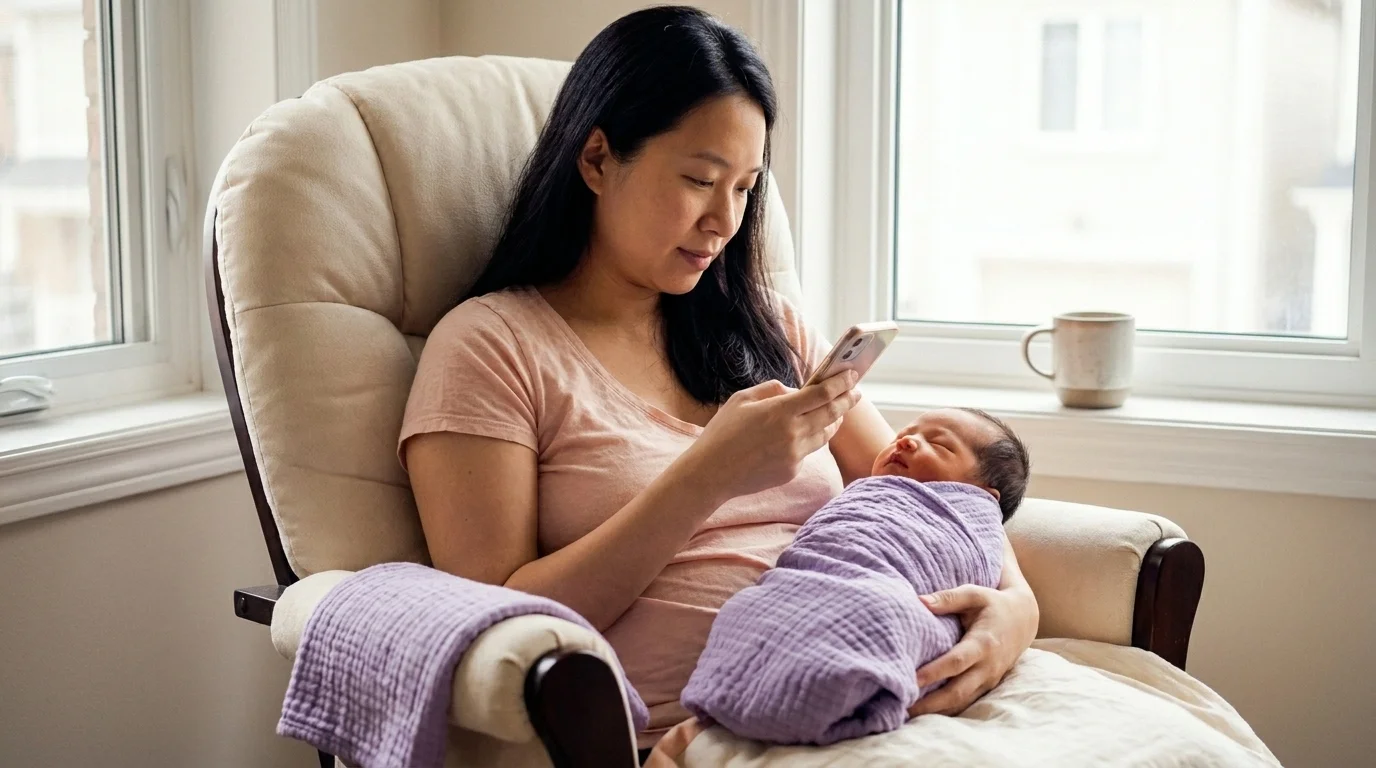
It is now four-thirty in the morning, in my own bedroom, and the baby asleep on my chest has not moved. The thing I am feeling has, in the last twenty minutes of this essay, changed its name. It is not an instinct. It is an attention. It is the result of a brain that has been quietly rearranging itself for nine months and that will keep rearranging itself for some months after this one, in service of a task it was not previously asked to perform. It is also a learning — a specific, irreducible, daily learning that this particular small person needs this particular kind of care at this particular hour. The cultural script promised me a download. What I have is something better, and slower, and more honest, and more recognisably my own. The room is dark. The baby is asleep. The brain is still working.
Frequently Asked Questions
Maternal instinct is the cultural name for the urge and felt sense of caring for one's own child. The recent scientific literature reframes most of what it actually describes as the result of brain remodelling and hormonal change during pregnancy and the postpartum, plus learned caregiving, rather than a pre-installed knowing. Chelsea Conaboy's Mother Brain and the 2025 Nature Communications study by Servin-Barthet and colleagues are the most accessible recent syntheses.
Real brain and hormonal changes happen — a 2025 Nature Communications study documented a U-shaped grey-matter trajectory in pregnancy (-2.7% in the second trimester, -4.9% immediately before delivery, +3.4% recovery within six months postpartum), driven by the hormones estriol sulfate and estrone sulfate. The older cultural idea of an automatic, gendered 'instinct download' is not supported by the current evidence (Chechko & Nehls, Neuroscience Insights, 2025).
Yes — fathers, adoptive parents, and other caregivers develop the same neurochemistry and brain changes when they spend hands-on time with the baby. A 2026 longitudinal study in Translational Psychiatry tracked grey-matter changes in 25 fathers across six months postpartum that mirrored patterns seen in mothers and correlated with one-on-one caregiving time, not biology. Men and women show no measurable difference in oxytocin levels during the first six months, and adoptive parents and gay fathers display the same neurochemical patterns.
It is common — common enough that the research literature treats it as the baseline expectation rather than the exception — for the felt experience of attachment to take days or weeks to develop after a baby is born. Approximately 10% of women experience postpartum depression within the first six weeks. If the absence of attachment persists beyond two weeks, if there are intrusive thoughts, or if sleep, appetite, or mood feel out of reach, contact Postpartum Support International (call or text 1-800-944-4773), call or text 988 (Suicide and Crisis Lifeline) in acute distress, and book a visit with a midwife, GP, or OB. Postpartum depression is a recognised, treatable medical condition.
The recurring features reported in the literature include heightened sensitivity to the baby's cues, faster and more accurate emotion-recognition in faces, an organised vigilance that does not collapse under load, and tolerance for interrupted sleep. The same features appear in fathers and adoptive parents who spend equivalent hands-on caregiving time, which is why the contemporary literature increasingly refers to caregiving circuitry rather than to instinct.
It means the cluster of attentional, emotional, and physiological responses a new parent develops toward a child in their care. Most of it is explained by hormone-driven brain remodelling in the gestational parent during pregnancy, paired with caregiving-time-driven brain remodelling in non-gestational parents. None of it is a downloadable program that arrives complete at birth, and the cultural story that it should be is one of the more damaging assumptions a new mother can carry into the first weeks of her child's life.
Check Out These Related Articles

Motherhood
The Growing Trend of Fathers as Caregivers: Redefining Paternal Involvement in Child Rearing

Parenthood and the Quest for Identity: Nurturing Individuality Within Family Systems