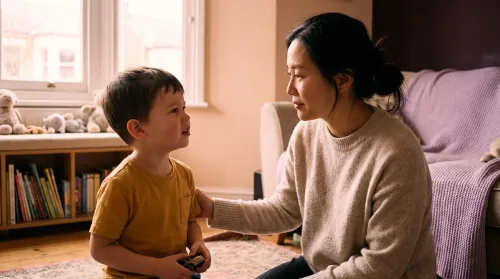
Active Parent


Type "active parent" into Google and you will mostly get school login portals — ActiveParent 3.0 and the district access systems Mississippi school districts use to check grades and attendance. Useful, if that is what you came for. But the phrase most of us are actually reaching for is active parenting, and it is a different thing entirely: showing up in your kid's daily life on purpose, with warmth — not just hovering nearby with a phone in your hand.
Here is the part I did not expect when I started reading the research. The payoff does not come from adopting a parenting "style," and it definitely does not come from buying a program. It comes from small, concrete things you do most days, and from being warm while you do them. This guide covers what active parenting is, the signs you are already doing it, a 21-minute daily routine that has been making the rounds, what it looks like from toddler to teen, what the evidence says your child actually gets out of it, and where engaged tips over into over-parenting. Start here: parenting strategies that hold up.
What Is Active Parenting?
Active parenting means being consistently present, warm, and hands-on in your child's daily life — guiding and connecting, not just supervising from the sidelines.
In 2025, three researchers — Tan, Cheung, and Lee — did something nobody had done at this scale: they pooled 22 separate meta-analyses to ask how parenting actually relates to how kids do at school, and found that the effect runs through concrete involvement practices and parental warmth more than through any broad "style" a parent claims. The average effect on academic outcomes was modest — about r ≈ .16 — but consistent. I am going to be honest about that number, because inflating it is exactly the kind of thing that makes parents stop trusting parenting advice.
This is where I lose patience with both camps. One says parenting is everything, that a single wrong move dooms your kid. The other says children turn out however they turn out and you are mostly along for the ride. The evidence sits in neither place: what you do matters — modestly, cumulatively, and mostly through the ordinary warm stuff — and it is not destiny. That is not a hedge. It is the finding.
And to clear one thing up: active parenting is an approach, not a product. It is not the ActiveParent school portal, and it is not the Popkin "Active Parenting" curriculum you can buy a workbook for. It is the same thing the parenting editors at outlets like parents.com and children's-health systems mean when they say engaged or involved parenting — a way of showing up. The rest of this guide is what showing up looks like on a normal Tuesday.
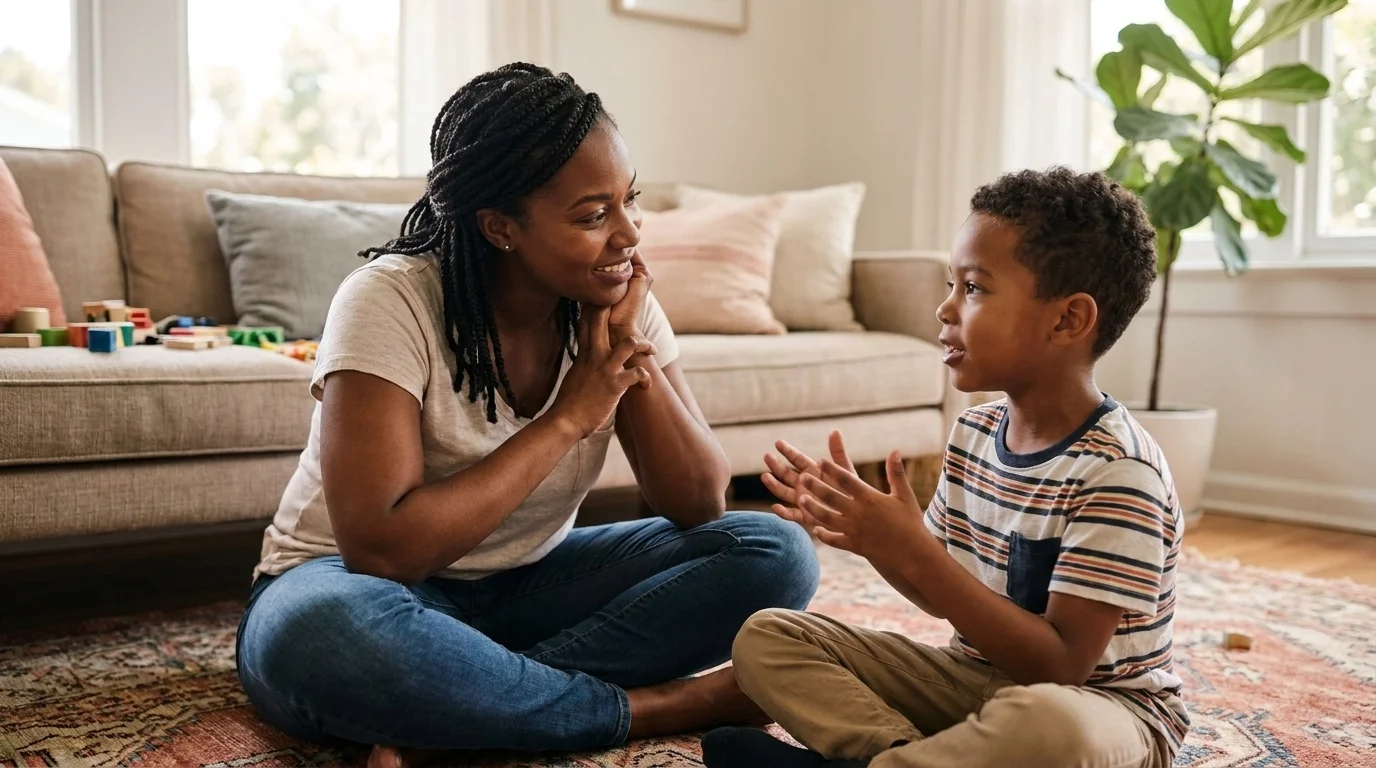
7 Signs You're Already an Active Parent
You tune in to your child's feelings, show up for their moments, listen for real, keep consistent routines and rules, and bring your child into decisions that are partly theirs. If that sounds like an ordinary week, that is the point.
Here are the seven signs the ranking "signs you're an active parent" lists tend to circle — with the one thing they usually leave out.
- You attune to emotions. You name and validate the feeling ("that's frustrating") before you jump to fixing it.
- You show up. Bedtime, the recital, the ordinary Tuesday pickup — presence, not just attendance.
- You play actively. You get on the floor or into the game, rather than supervising from the couch.
- You listen and ask real questions. Open ones, the kind that cannot be answered with "fine."
- You keep consistent routines and warm, clear rules. Researchers call this behavioral structure, and — spoiler for the benefits section — it is the part the evidence likes most.
- You involve your child in age-appropriate decisions. Which of two outfits, how to split the weekend, what the screen-time deal is.
- You model the values you want. One children's-health system, Norton Children's, sums this one up as plainly as it gets: be the role model.
Notice what these have in common: not one is a "style" you announce. They are things you do. That is the whole finding from the 2025 meta-analysis — the doing and the warmth carry the effect, not the label you would put on yourself in a parenting quiz.
How the 7-7-7 Rule Builds Daily Active-Parenting Habits
The 7-7-7 rule means seven focused minutes in the morning, seven after school or work, and seven before bed — 21 undistracted minutes of connection a day.
It started circulating as a memorable way to make "quality time" specific, and it works because the hard part is not the total minutes — it is the undistracted. Twenty-one minutes with your full attention beats an afternoon in the same room with half of it. Here is what the three windows can look like:
- Morning (7 min): no logistics, no "did you pack your bag." One real question, or just company while they wake up.
- After school or work (7 min): the decompression window. Let them offload the day before you ask them to do anything with it. Snack, no agenda.
- Before bed (7 min): the one most families already half-have. A book with a younger child; for an older one, the lights-off talk where kids say the things they will not say across a table.
Around those, a few low-lift habits do the same job: naming feelings out loud, protecting a little one-on-one time with each kid, and saying yes to active play when you can. Two honest caveats, because I would rather you trust me than be sold to. First, 7-7-7 is a scaffold somebody attached a catchy number to, not a clinical prescription — the magic is in the "undistracted," not the arithmetic. Second, 21 good minutes is a floor, not a fix.
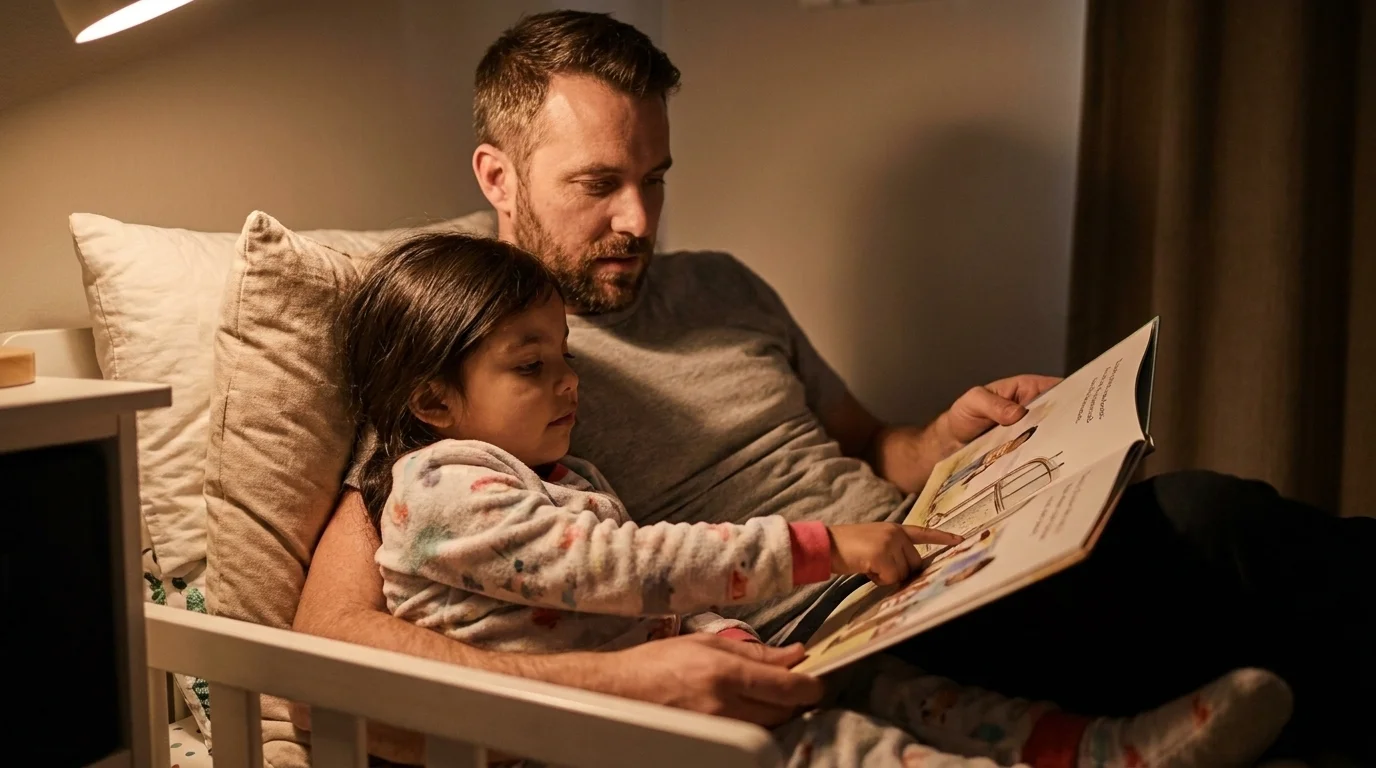
What Active Parenting Looks Like at Every Age
Active parenting shifts as your child grows: hands-on nurturing for toddlers, guided independence for school-age kids, and coaching from behind for tweens and teens. Same warmth and involvement — delivered differently.
Toddlers & preschoolers
Narrate what you are doing, get down and play, and keep routines predictable — the sameness is not boring to a two-year-old, it is safety. This is the stretch where warmth and consistency lay the groundwork for early childhood development, so the "active" part is mostly presence, patience, and repetition.
School-age (6-11)
Now it becomes partnership: homework alongside rather than for them, real chores, and monitoring that comes with consistent rules. This is the band the CDC is describing when it links parents who monitor behavior and keep consistent rules to kids with healthier peer relationships, more school engagement, and higher self-esteem. Involvement here is warm structure, not surveillance.
Tweens & teens
This is the age I actually work in, and the move is genuinely different: coach from behind rather than control from the front. You protect their growing autonomy, stay emotionally available for the moment they do decide to talk, and pick your rules like they cost something — because to a fourteen-year-old, they do. For the record, my own teenager's screen-time negotiations are not going especially well, so I say all of this as someone in the trenches, not above them.
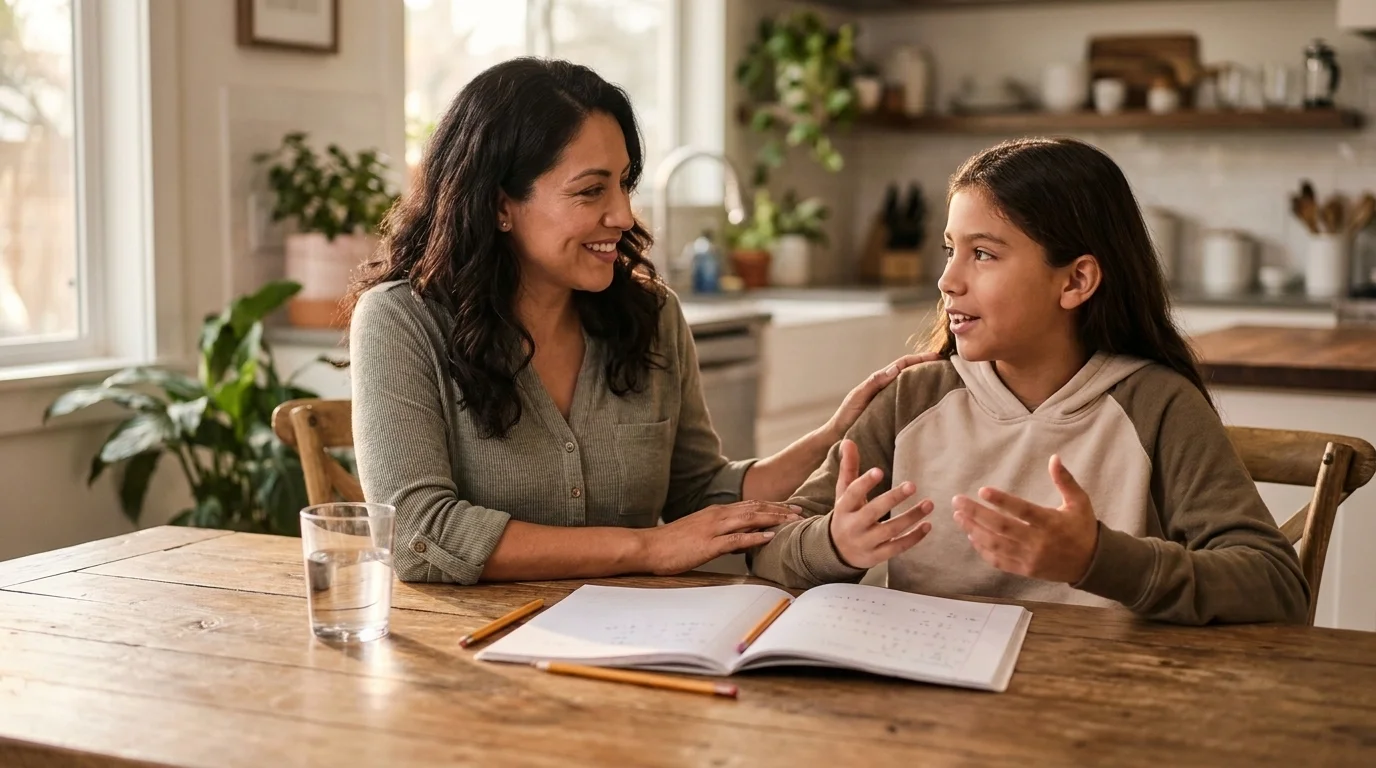
The Research-Backed Benefits for Your Child
Consistent, warm involvement is linked to stronger peer relationships, more school engagement, higher self-esteem and resilience — and, for kids under real stress, even measurable physical-health protection.
Start with the everyday version, from the CDC: children whose parents "monitor their behavior and have consistent rules are more likely to have healthy and close relationships with their peers, be more engaged in school, have higher self-esteem, and are less likely to bully others." That is a lot of payoff from what is, functionally, showing up with rules and warmth.
Then there is the finding that moved this out of the feelings column for me. A 2023 study of 165 Black and Latinx children (average age 11.5), published in PMC, found that among the kids reporting the most stress and discrimination, nurturant, involved parenting was linked to lower cardiometabolic risk — a protective effect you can measure in a body, not just a mood. Involvement, it turns out, can buffer real physiological stress.
One limit, stated plainly, because this is exactly the kind of advice that gets misread: none of this is a treatment. I am a researcher and a parent, not a clinician. If your child is genuinely struggling — persistent anxiety, withdrawal, changes in sleep or mood you cannot explain — warm attention is the baseline, not the intervention. Talk to your pediatrician or a licensed child mental-health professional. And remember the honest number: the average effect on academic outcomes is modest (r ≈ .16). Real, consistent, worth doing — and not a magic wand.
Active Parenting vs. Over-Parenting — Where to Draw the Line
Active parenting is warmth plus room to grow. Over-parenting — hovering, harsh, or controlling — is the version research links to worse outcomes, not better. The difference is not how much you care; it is what you do with the caring.
The same 2025 meta-analysis drew a line I wish more parenting content would draw: not all "involvement" is good. Behavioral control — rules, knowing where your kid is, consistent limits — was positively associated with outcomes. But psychological control and harsh control were negatively associated. Translated: staying involved helps; taking over hurts.
The practical tell is simple. An active parent scaffolds a hard thing and then steps back to let the kid do it. A helicopter parent solves the hard thing, hovers, and quietly removes the chance to try. Same worry underneath — you just have to keep handing the wheel back. If you want a name for the adjacent approach that shares this warmth-plus-autonomy stance, look at respectful parenting, which has been getting more attention lately for exactly this reason.
Where Active Parenting Fits Among the 4 Parenting Styles
Active parenting maps most closely to the authoritative style — high warmth plus clear structure — which is the one style research links to better outcomes. Briefly, the classic four are: authoritative (warm and firm), authoritarian (firm and cold), permissive (warm and structureless), and neglectful (neither).
Here is the part worth keeping. In the 2025 meta-analysis, only authoritative parenting was positively associated with children's academic outcomes — the authoritarian, permissive, and neglectful styles were not. So active parenting is not a new fad label competing with those four. It is what the winning one looks like in practice on a normal day: warmth, involvement, and structure, together. If you want the full breakdown, here is the 4 parenting styles, explained.
The one thing to do this week
Strip away the research and the frameworks and it comes down to this: being an active parent is not a label you claim or a product you buy — it is what you do, warmly and on purpose, on ordinary days. The evidence rewards small and consistent over big and occasional, and warmth beats control at every age.
So do not overhaul anything. Pick one seven-minute window this week — the after-school decompression is the easiest to protect — and give it your full, phone-down attention. That is active parenting, and it is available tonight. When you want more, the parenting strategies library is where I would go next.
Frequently Asked Questions
Being consistently present, warm, and hands-on in a child's daily life — communicating, playing, and guiding rather than just supervising. It aligns most closely with the authoritative style, the only one research links to better outcomes.
You show up for events, tune in to your child's emotions, listen actively, keep consistent routines and rules, and involve your child in age-appropriate decisions.
Spend 7 focused minutes in the morning, 7 after school or work, and 7 before bed — 21 undistracted minutes a day of connection with your child.
Authoritative, authoritarian, permissive, and neglectful. Research links only the authoritative style — high warmth plus clear structure — to better child outcomes.
No. Active parenting is warm engagement plus healthy independence; helicopter or over-parenting uses harsh or psychological control, which research links to worse outcomes.