Motherhood


Motherhood is, the dictionary will tell you, the state of being a mother. It is a true sentence and a nearly useless one — true the way water is a compound of hydrogen and oxygen is true to someone who is drowning. I have been a mother for nine years, and I have wanted, more than once, to write in the margin beside that definition: and also everything else. This essay will not sell you anything — not a routine, not a product, not a version of motherhood you are quietly failing to perform. I want instead to say something truer than the dictionary and gentler than the internet: that what has happened to you has a name, that the science has caught up with the feeling, and that the depleted, tender, mixed-up thing you are is not a malfunction. What motherhood really means, the shift neuroscience now calls matrescence, why the joy and the difficulty arrive together, and the seasons a mother moves through — that is where we are going.
What Motherhood Really Means
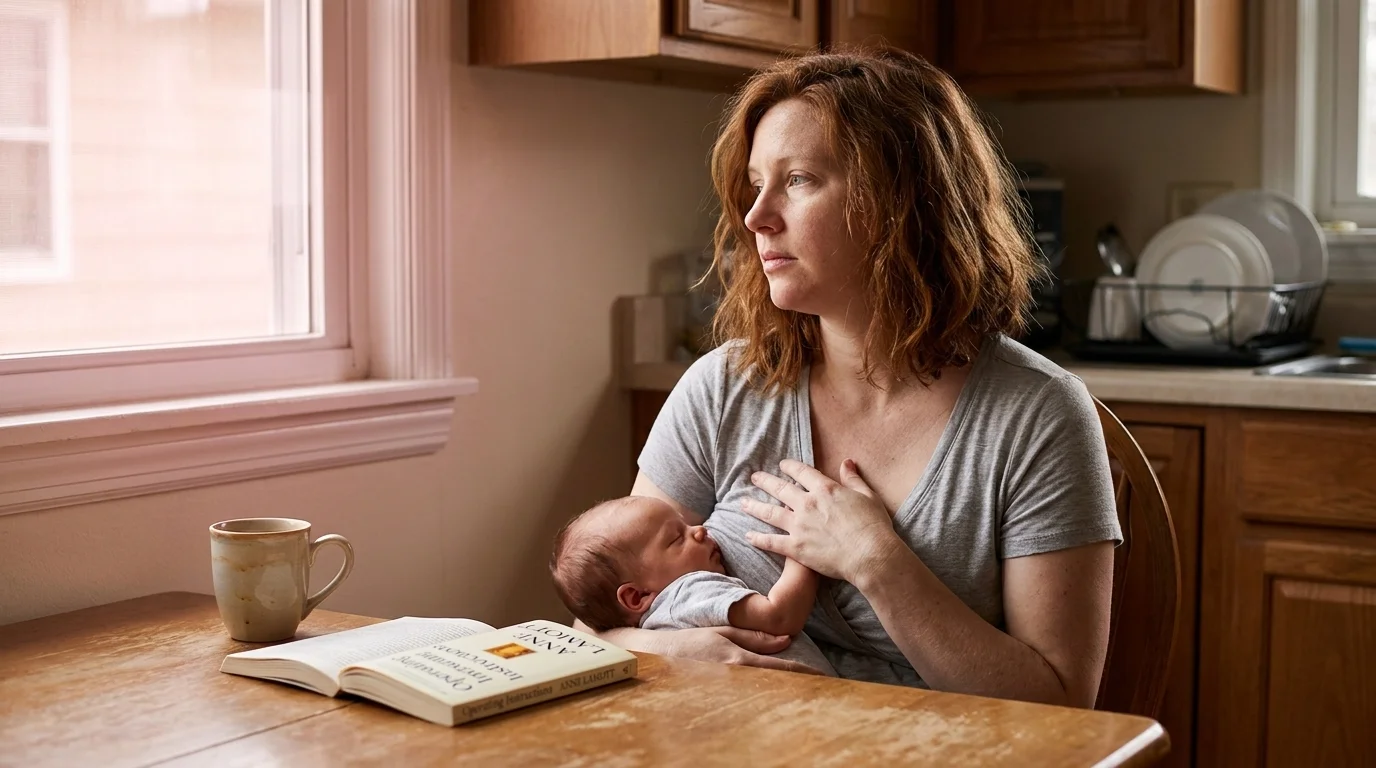
Here is the definition worth carrying: motherhood is the state of being a mother, and then the slow, lifelong transformation of who that mother is. The first half is the doorway. The second is the house you find yourself living in afterward. Everyone hands you the doorway — the dictionary, the greeting cards, the strangers who congratulate you in the street — and almost no one mentions the house.
We tend to talk about being a mom as a role, a job with a title and a set of duties you clock into and out of. But a role is something you can set down at the end of a shift, and this cannot be set down. It is not a hat you wear; it is a change in the weather of the self. What it means, then, is less a definition than a direction: you become, over years, someone your childless self would not entirely recognize. That is not a loss to be corrected. It is the work. It is also why no two mothers describe it the same way, and why the honest range of parenting perspectives matters more than any single authoritative account — including this one.
Matrescence — The Identity Shift No One Named
There is a word for what I have been circling, and until recently almost no one used it. Matrescence. It was coined in 1973 by the medical anthropologist Dana Raphael and revived for our own decade by the clinical psychologist Aurélie Athan at Teachers College, Columbia. It names the developmental transition into motherhood — a passage as real, as bodily, and as disorienting as adolescence, and until now nearly as unmarked on the far side of childhood.
I like the word because it insists the change is not in your head, or not only there. When I had my first child I told my husband, in the flattened voice of someone reporting a symptom, that I did not recognize myself. I assumed I was tired, or failing, or both. What I did not know was that the ground for the feeling had been laid in the body. Pregnancy, we now know, reshapes the maternal brain on a scale researchers compare to puberty: gray matter is fine-tuned across roughly 94 percent of the brain, its volume reduced by about four to five percent, with changes still measurable two years after birth. This is not damage. It is renovation. The same physical transformation of pregnancy that everyone can see from the outside has an interior counterpart no one photographs.
When a baby is born, so is a mother — the line comes from a group of researchers writing about matrescence, and it is the truest four-beat sentence I know on the subject. A person you have never met moves into your body, and then into your arms, and the self that greets her is not quite the self that expected her. Naming that is not a small thing. It was the difference, for me, between believing something had gone wrong and understanding that something was, painfully and precisely, going right.
Related Article: Embracing Imperfection: The Art of Realistic Parenting
The Honest Truth — Joy and Difficulty, Together
Let me answer the question I hear most often, the one mothers ask in a lowered voice as though confessing: is it all right not to enjoy all of it? Yes. Loving your child and disliking large stretches of the job are not a contradiction; they are the ordinary weather of a mothering life. The feeling even has a name — maternal ambivalence — and it is far older than the internet's recent discovery of it. Adrienne Rich, in Of Woman Born, was writing about it fifty years ago, taking the braid of love and fury at the center of mothering seriously enough to put it on the page.
What is new is the evidence. A 2025 study in the journal Sex Roles, following 499 UK mothers of children under five, found that ambivalence a mother cannot manage tracks with higher depression and anxiety — partly in its own right, and partly through the shame that gets wrapped around it and the self-compassion that shame quietly eats away. And the distance between how she actually feels and the airbrushed ideal she is measuring herself against makes all of it worse. The mixed feelings are hard enough on their own. The private conviction that having them makes you a bad mother is what turns them corrosive.
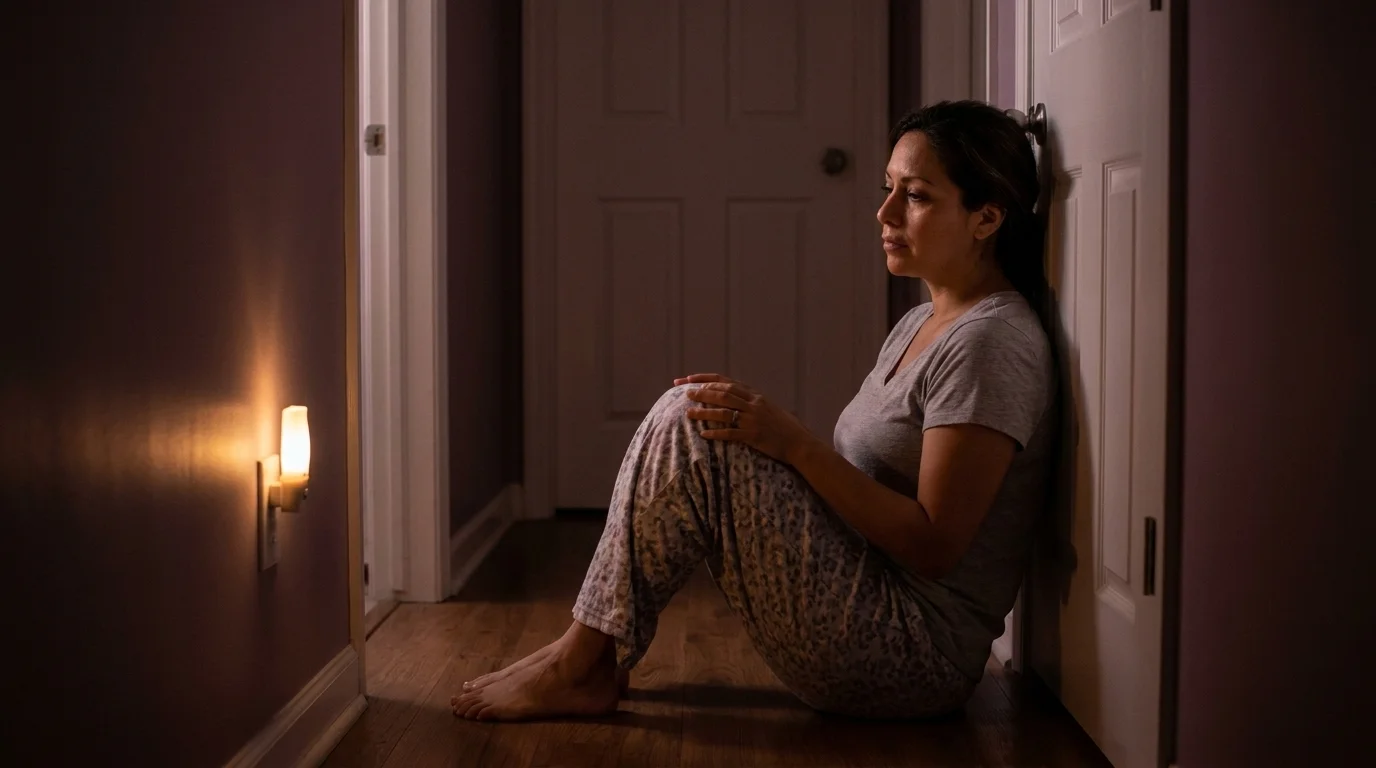
So I would rather we said the difficult part out loud and let it sit next to the joy without either one cancelling the other. The morning your toddler says your name as though it were the only word worth saying, and the evening an hour later when you would trade a year of your life for twenty unbroken minutes alone — both are true, in the same body, on the same day.
One honest caveat belongs here, because ambivalence and something more serious can look alike from the inside. If the low feeling does not lift — if it hardens into persistent hopelessness or anxiety, or arrives with thoughts of harming yourself or your baby — that is not a character flaw to push through, and it is not the ordinary ambivalence I am describing. It is treatable, and asking for help is a form of mothering, not a lapse in it. In the US you can call or text the 988 Suicide & Crisis Lifeline, or reach Postpartum Support International at 1-800-944-4773. Tell someone. That, too, is love.
The Seasons of Motherhood
If there is one thing I wish someone had told me at the start, it is that motherhood is not a single state but a sequence of them, and that the one you are in now — however permanent it feels at three in the morning — is already turning into the next. The hard stretch is not your whole life. It is a season.
The all-consuming early years
These are the years of the body: the feeding, the carrying, the broken nights, the sense of having been subsumed into someone else's survival. Time narrows to the next hour. It is the most physical and least articulate stretch of mothering, and it does not, whatever the photographs suggest, last forever.
The growing-independence years
Then comes what I have elsewhere called the long middle — the years between the newborn fog and the teenage door-slam. The child walks a little further from you each day and turns back to check that you are still watching. Your self, submerged in the early years, begins to surface; you remember what you used to think about when you had a mind to spare. It is a quieter reshaping, less grief than the beginning, and easier to love.
The letting-go years
And then the work turns, slowly, into the work of letting go — of becoming the fixed point a nearly-grown person leaves from and returns to. Each of these seasons remakes you again. Matrescence, it turns out, is not a single doorway you pass through once. It is a house you go on renovating, room by room, for the rest of your life.

Words for What You're Feeling
Part of why naming matters is that the right word can hold a feeling you could not otherwise carry. The 2025 matrescence-education pilot found exactly that — teaching mothers the concept, handing them the language for the transition, measurably improved how they felt. Writing about matrescence in The Conversation, the researchers Eslick, Ramos and Roberts put the mechanism plainly: just knowing the concept can help by normalizing what they might be experiencing. So here are a few sentences worth keeping for the days the feeling outruns your vocabulary.
When a baby is born, so is a mother.
Aurélie Athan calls matrescence a lifespan, developmental transformation that is biological, neurological, psychological, social, cultural, economic, political, moral, existential, ecological, and spiritual in nature — which is a long and precise way of admitting that no single part of you is left untouched.
And Adrienne Rich, half a century ago, gave us permission to hold the love and the difficulty in the same hand and call the result serious. Not a problem to be solved. A subject to be honored.
Accepting the Season You're In
Acceptance, in my experience, is not a decision you make once but a practice you keep returning to, and it is made of ordinary parts. Name the transition — call it matrescence, and let the word do the quiet work of telling you that you are changing, not breaking. Let the mixed feelings exist without a verdict attached; you are allowed to find parts of this hard without it meaning you love your child any less. Lower the bar of the perfect mother until it sits somewhere a real, tired human can actually reach, because that phantom ideal is, the research suggests, making all of it harder to carry.
What steadies me is that none of this is merely reassurance. The permission is evidence-based. The neuroscience says the change is real; the ambivalence research says the shame is the risk, not the feeling; the education studies say that simply understanding what is happening to you helps. You are not being asked to feel better by pretending. You are being handed the actual shape of the thing, and told you may set down the guilt you were never required to carry.
There is a sentence I keep coming back to, and I will give it to you plainly: you are not failing at motherhood. You are being remade by it — and, for the first time, we have a name for the remaking and a growing body of evidence that the disorientation is the process working, not the process failing. The season you are in will turn; the self you are becoming is not lost, only under construction. If any of this has made you feel less alone, there are other mothers thinking out loud in our parenting perspectives — not to fix you, only to keep you company. Come sit with us a while. The tea will be cold. It always is.
Frequently Asked Questions
Motherhood is the state of being a mother — but beyond the definition it names a lifelong transformation of identity, priorities, and sense of self that begins with a child and never fully ends.
Yes. Loving your child while disliking parts of the role — the sleeplessness, the lost freedom — is called maternal ambivalence, and research finds it is the shame around those feelings, not the feelings themselves, that harms wellbeing.
Profoundly, and even physically. Pregnancy remodels roughly 94% of the brain in changes still measurable two years later — part of a whole-self transition psychologists call matrescence.
By naming the transition (matrescence), allowing mixed feelings without judgment, lowering the perfect-mother bar, and recognizing motherhood moves through seasons — the hard one you are in will change.
Check Out These Related Articles

Decoding the Myth of the Natural Maternal Instinct: Insights and Realities

The Growing Trend of Fathers as Caregivers: Redefining Paternal Involvement in Child Rearing

Parenthood and the Quest for Identity: Nurturing Individuality Within Family Systems